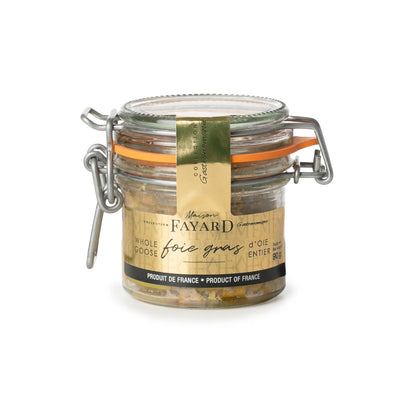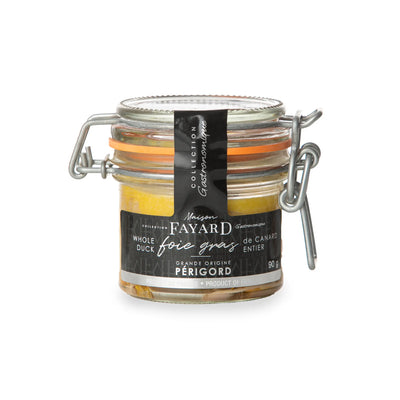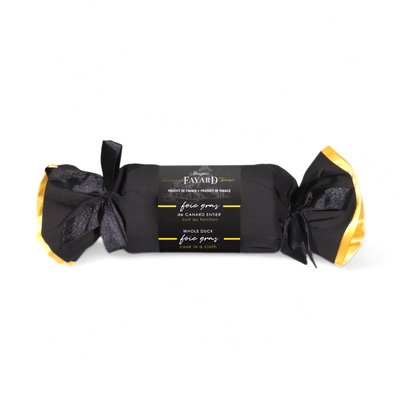


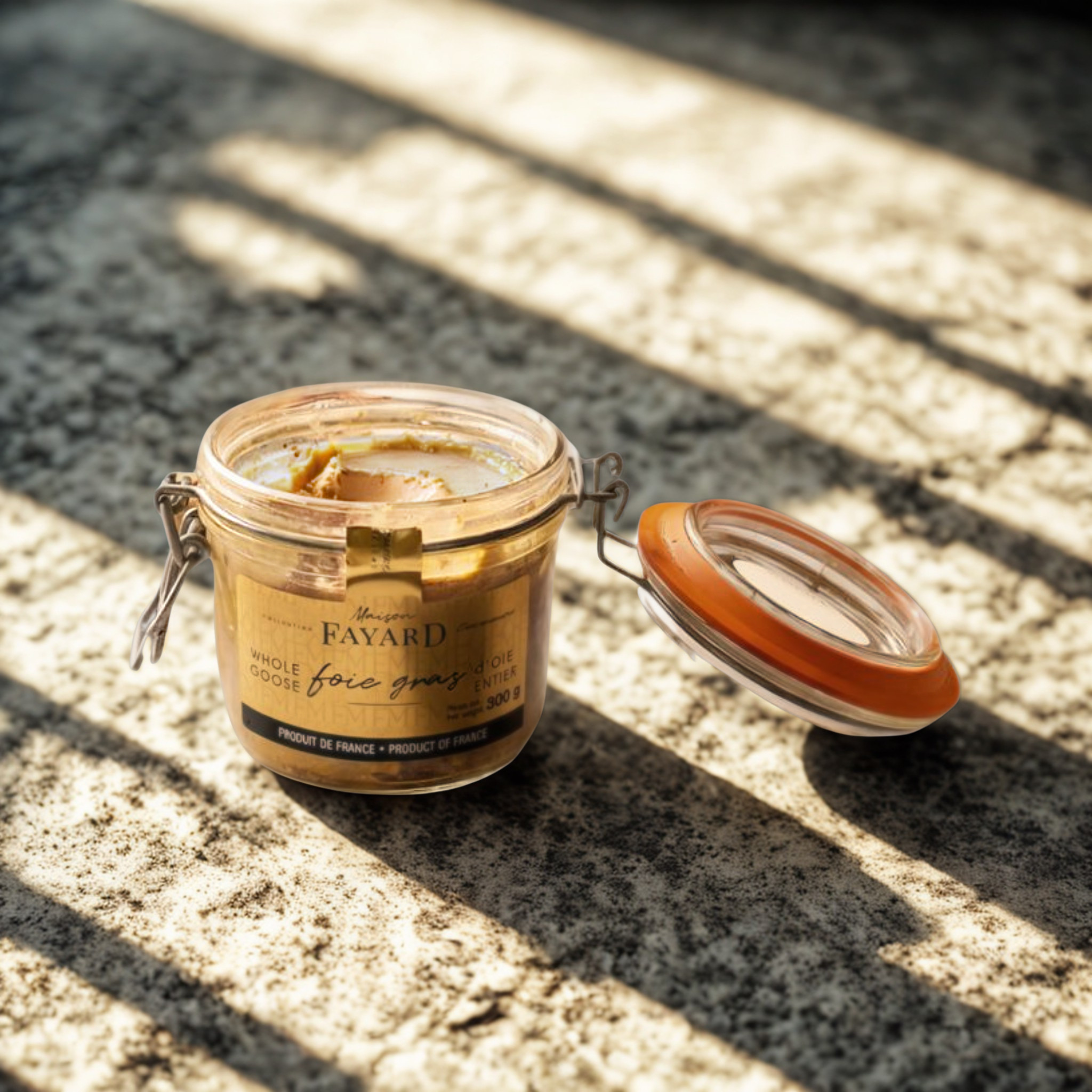
You open your jar of whole foie gras and the colour catches your eye: neither the bright pink you expected, nor the golden beige of a classic block, but a greyish tint, sometimes slightly dull. The immediate reaction is often suspicion. Yet in the vast majority of cases, this colouring is not only normal, it is even the sign of an authentic product, minimally processed and free of additives. Here is what this colour really reveals about your foie gras.
The colour of foie gras is not uniform
Contrary to what one might imagine, whole foie gras does not come in a single, uniform shade. The natural colour of the raw product already varies according to several factors: the species of the animal, its diet, and the region of production.
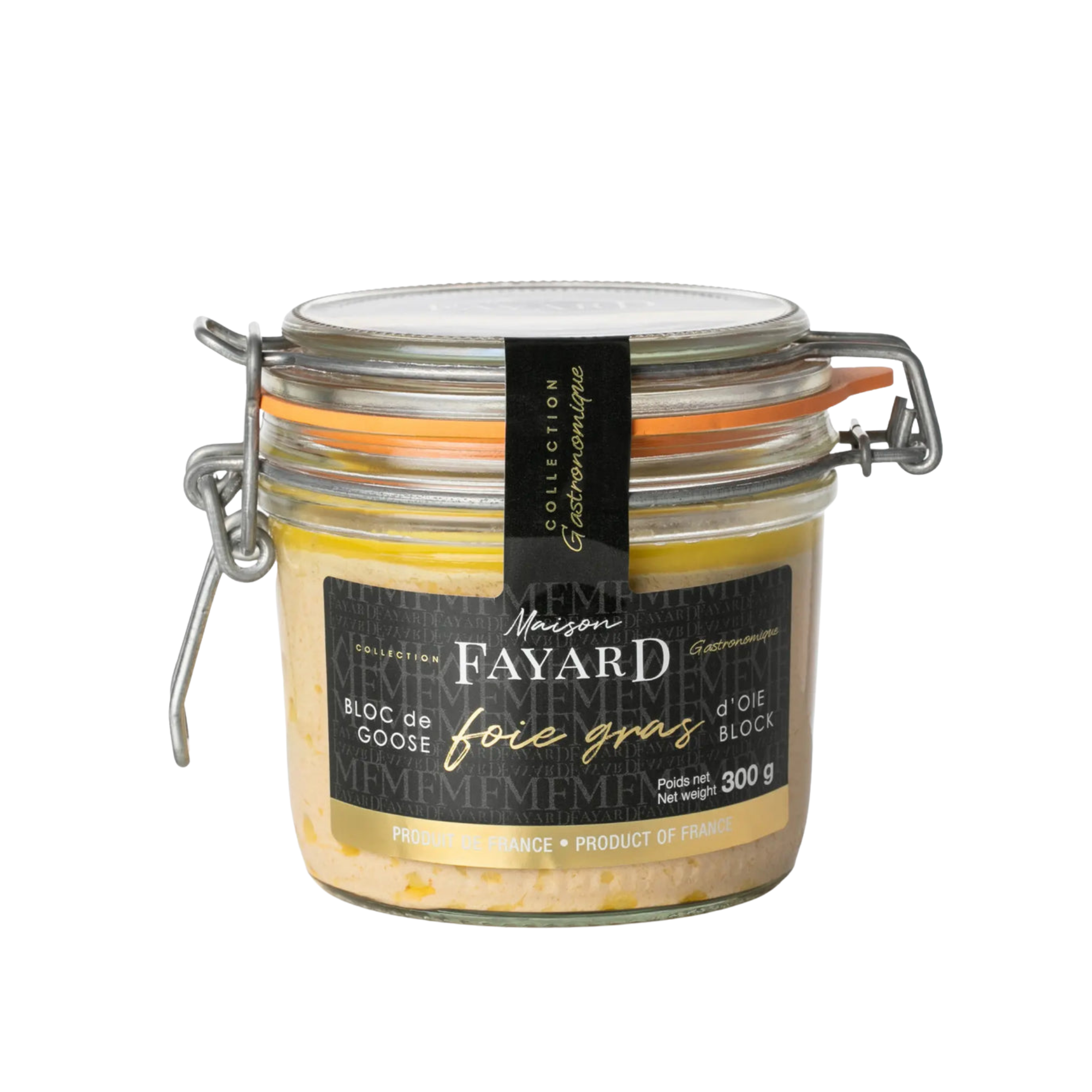
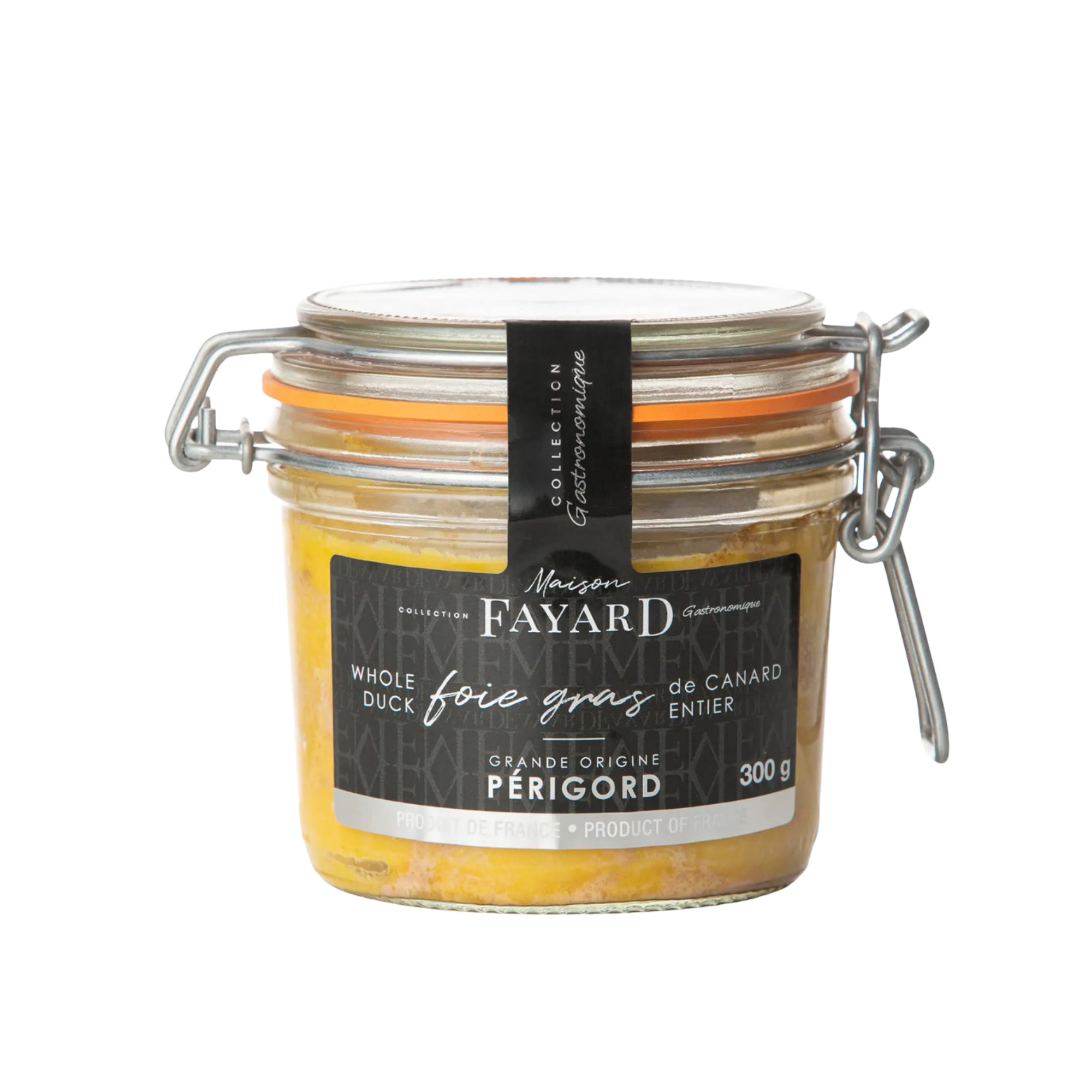
Duck foie gras generally shows a more pinkish, golden tint. Goose foie gras naturally tends towards lighter tones, almost ivory or cream, sometimes perceived as dully greyish by eyes not used to it. These nuances are specific to each product and are in no way a defect.
Sterilization naturally changes the appearance
Foie gras packed in a jar goes through a high-temperature sterilization process. It is precisely this process that ensures its long shelf life, without refrigeration, for several years.
This rise in temperature has a direct effect on the colour. The heat softens the pink pigments naturally present in the liver. The product then takes on a more neutral, paler, sometimes slightly greyish tint. This phenomenon is strictly linked to the cooking and thermal transformation of the product. It does not mean that the foie gras is spoiled or that it has aged prematurely.
A semi-cooked foie gras, packed in a terrine and kept refrigerated, will keep more of its pink colour because it is subjected to a lower temperature. The difference in tint between a sterilized foie gras in a jar and a semi-cooked one is therefore expected and consistent.
Surface oxidation, a superficial phenomenon
In the absence of chemical preservatives or added antioxidants, even minimal contact with air can cause slight oxidation on the surface of the foie gras. This reaction shows visually as a thin, greyer or darker layer around the edge of the product, or directly on the surface once the jar is opened.
This oxidation is superficial. It affects neither the flavour, nor the texture deep down, nor the food safety of the product. It is precisely the absence of preservatives that is responsible, which paradoxically makes it a positive indicator: you are holding a natural product, made with few interventions.
Small white spots and the grainy look
Some artisanal foie gras also show small light spots or a slightly grainy texture on the surface or inside. There is nothing worrying about these elements.
They correspond to the natural crystallization of the fats during cooling or ageing in the jar. The richer the foie gras is in quality fat, the more visible this phenomenon can be. It is frequently observed on artisanal products whose composition has been little modified. It does not call into question the taste or the value of the product.
Foie gras in a jar improves with age
It is a reality that knowledgeable enthusiasts of the South-West know well, but which often surprises the rest of the world: whole foie gras sterilized in an airtight jar, aged in good conditions, does not just keep, it improves.
The date printed on the jar is a best-before date. It corresponds to the wording "best before". It is not a safety deadline, but an indication beyond which the maker no longer guarantees optimal taste qualities. As long as the jar is perfectly airtight, with no bulging lid or suspicious smell on opening, the product remains entirely fit to eat.
But what is even more remarkable is what happens inside the jar during that time. Over the months, the fat naturally present around the liver slowly migrates by capillary action towards the heart of the lobe. The aromas concentrate, blend and round out. The texture becomes creamier, less crumbly. This is what artisanal producers call ageing in the jar, and some readily compare it to the ageing of a great wine.
In the traditions of the Périgord and Gascony, it is even common to turn the jar a quarter turn each month to encourage this migration of the fats and even out the flavours. A foie gras kept two or three years after it was made can thus reveal an aromatic complexity and a roundness on the palate that the same product, eaten too early, would not yet have developed.
This logic of course has its limits. Past a certain point, often beyond five to six years depending on storage conditions, the product can begin to lose finesse rather than gain it. There is therefore an ideal window, specific to each product, each cellar, each vintage. As with wine, the art is knowing when to open the jar.
When should you really worry?
The grey colour alone is not a warning sign. Other signals, however, should draw your attention.
An acidic, rancid or frankly unpleasant smell on opening is the first sign not to ignore. A texture that crumbles abnormally, a very pronounced green or brown colour, or a bulging lid revealing poor storage are all clues that should lead you not to eat the product.
Apart from these signs, a slightly grey foie gras, that smells pleasantly of melting fat and South-West cooking, is a healthy product.
How to choose a foie gras in a jar?
Faced with a shelf or an online selection, a few simple markers help you make the right choice.
Look at the composition first: a quality whole foie gras contains only the liver, salt, possibly pepper and an alcohol such as Armagnac or Sauternes. The shorter the list, the more authentic the product.
Check the designation: "whole foie gras" (foie gras entier) is the noblest, made of one or several whole lobes. The "block of foie gras" is a reconstituted preparation, less prestigious.
Do not be thrown off by the colour. A slightly greyish foie gras in its jar can perfectly well reveal, at tasting, a remarkable creaminess and aromas. This is precisely the philosophy that guides the selections offered at Maison Fayard: favouring products chosen for their taste, their origin and their honesty, not for their appearance on a shelf.
Finally, if you love beautiful tables and moments that matter, know that a jar carefully kept in your cellar can become, over time, a gift to yourself. Be patient. The foie gras, for its part, works in silence.
Frequently asked questions about foie gras in a jar
Is a grey foie gras still good to eat?
Yes, in the vast majority of cases. The greyish tint is often linked to cooking, the absence of preservatives or slight surface oxidation. As long as the smell is pleasant and the packaging intact, the product is fit to eat.
Can you eat foie gras after its date?
If the date shown is a best-before date, yes, provided the jar is perfectly airtight, with no bulging lid or abnormal smell on opening. The best-before date is not a safety limit, but an indication of optimal taste quality.
What is the colour difference between duck and goose foie gras?
Duck foie gras is naturally more pinkish and golden. Goose foie gras is lighter, tending towards cream or greyish beige. This difference is natural and does not reflect a difference in quality.
Can you see small white spots in foie gras?
Yes. These spots correspond to the crystallization of the fats during cooling. It is a natural phenomenon, common on artisanal products, and has no effect whatsoever on taste or safety.