

Black garlic has fascinated home cooks and the most demanding chefs alike for several years. Born from a slow fermentation process rather than simple cooking, it concentrates unexpected aromas and remarkable nutritional properties. Before bringing it into your cooking or onto your tasting table, it is useful to understand what really sets it apart from traditional fresh garlic.
What black garlic really is
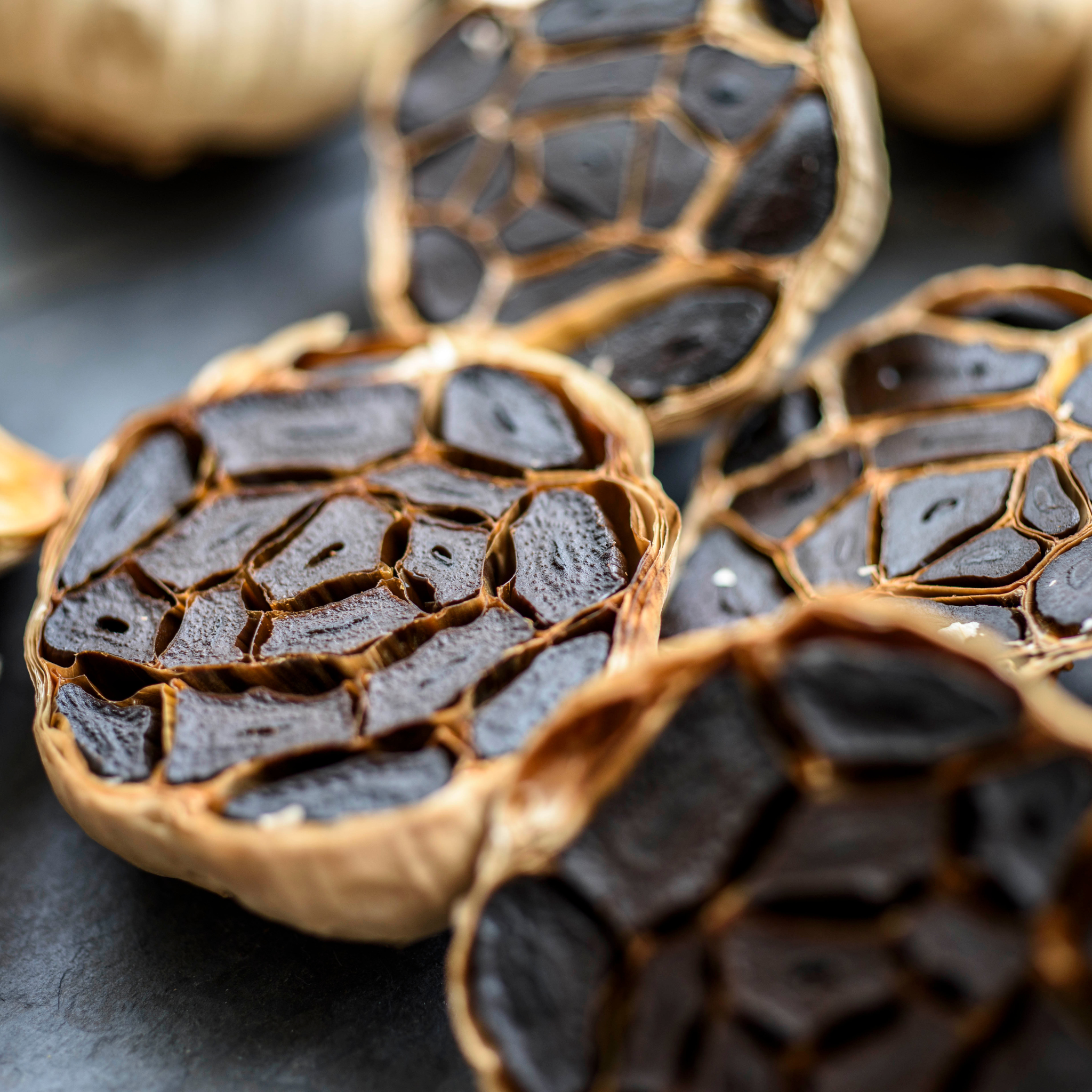
Black garlic is not a botanical variety of its own. It is ordinary white garlic subjected to a controlled fermentation at gentle heat, between 60 and 80 °C, for several weeks. This process triggers a Maillard reaction, responsible for the browning of the cloves and the deep transformation of their chemical composition. The result is supple, almost confit cloves, deep black, with a texture reminiscent of melting caramel.
This age-old process, popularized in Korea and Japan before conquering European tables, concentrates the natural sugars of the garlic while considerably softening its pungency and its characteristic smell.
Recognized health benefits
Fermentation does not only transform the taste: it significantly amplifies certain nutritional properties of the garlic.
Fresh garlic is already renowned for its richness in allicin, a sulphur compound with antioxidant and antimicrobial virtues. During fermentation, allicin converts into more stable organosulphur compounds, notably S-allylcysteine (SAC), better absorbed by the body and known for its beneficial effects on cardiovascular health.
The antioxidant content of black garlic is measured at between five and ten times higher than that of raw garlic according to several studies. These antioxidants help neutralize free radicals, contribute to cell protection and support the body's natural defences.
Black garlic is also recognized for its mild anti-inflammatory properties, its potential role in regulating cholesterol and its contribution to the balance of the gut flora. Its digestive tolerance is clearly higher than that of raw garlic, which makes it accessible to sensitive people.
It is worth remembering that these benefits are part of a varied, balanced diet. Black garlic is a remarkable functional food, not a remedy.
Its taste: what to expect
This is where black garlic surprises the most. Where fresh garlic stings and asserts itself, black garlic charms with its complex sweetness. You find notes of balsamic vinegar, liquorice, tamarind, sometimes a light touch of cocoa or candied prunes depending on the variety and terroir.
Its texture is melting, almost creamy, spreading naturally on a tartine or melting into a sauce. It is not acidic, not bitter, simply deep.
For a novice palate, it is often a revelation. For the connoisseur, it is a raw material to use with precision.
How to use it in fine cooking
Black garlic lends itself to a much wider culinary range than traditional garlic. Its sweetness makes it a finishing ingredient as much as a base ingredient.
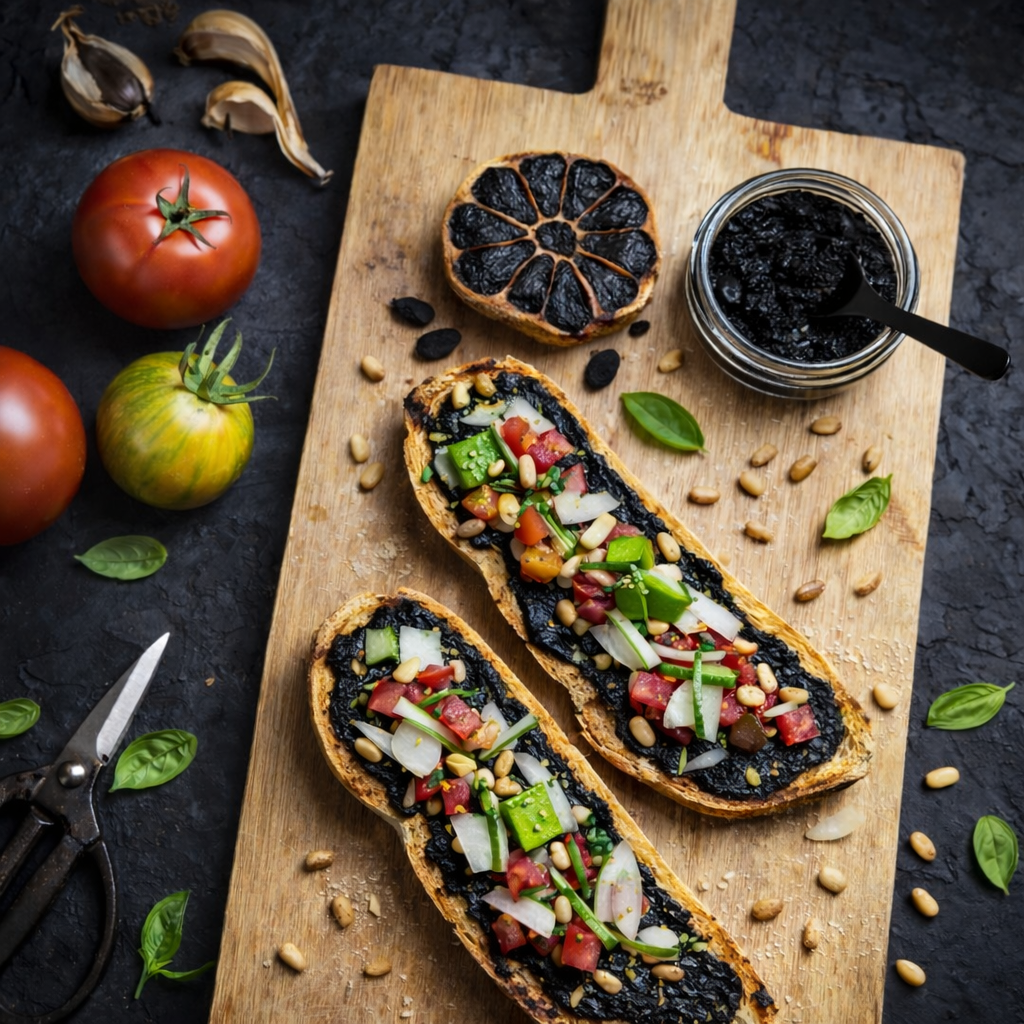
Mashed into a purée, it enriches a vinaigrette, flavours a maître d'hôtel butter or elevates a homemade mayonnaise. Placed whole on a tasting board, it naturally accompanies aged cheeses, quality charcuterie or characterful terrines. Stirred in at the end of cooking into a risotto, a wild mushroom sauce or a poultry broth, it brings an umami depth hard to obtain otherwise.
It pairs particularly well with duck confit, noble offal, blue-veined cheeses and braised red meats. On the drinks side, it finds its place alongside structured red wines, lightly oxidative natural wines, or even an artisanal brown ale.
Beginner or connoisseur: which level?
Black garlic is one of the few fine-food ingredients that is both accessible to beginners and worthy of the attention of the most demanding.
A beginner cook can use it without risk: it does not burn, does not sting, does not dominate the dish if used with measure. One or two cloves are enough to transform an ordinary dish.
The connoisseur will enjoy playing with varieties: black garlic from Lomagne, black garlic from Spain, black garlic of Asian origin, each carrying a distinct aromatic profile, nuanced by terroir and fermentation time.
How to choose your black garlic
Several criteria help you tell a quality black garlic from an ordinary product.
The texture should be melting and even, with no dry areas or hard residue. The colour should be a deep, uniform black; a too-light brown indicates incomplete fermentation. The smell should be soft, lightly sweet, with no residual raw-garlic note.
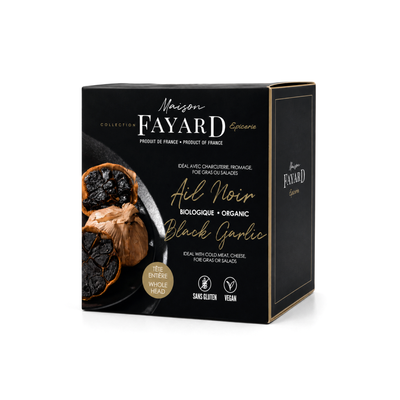
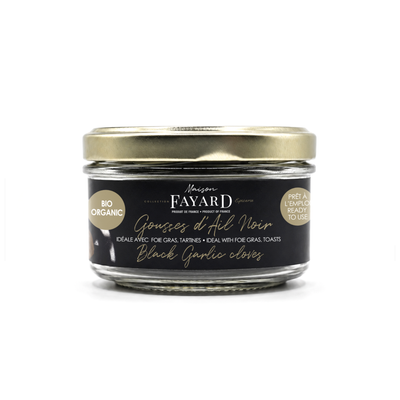
When buying, favour artisanal productions or carefully selected supply chains, where traceability is clear. Whole bulbs offer optimal storage. Separated cloves or black garlic purées are practical, but need to be consumed more quickly. At Maison Fayard, the black garlic references are chosen for their balance between aromatic intensity and sweetness, a key criterion for use in fine cooking.
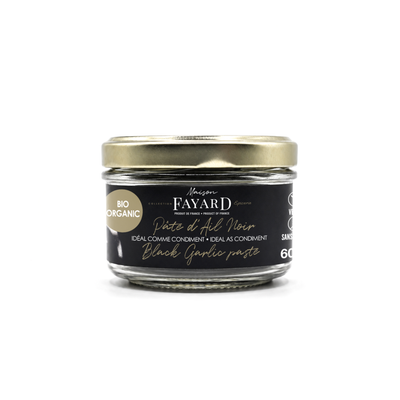
Finally, the format matters: for a first approach, a whole bulb lets you experiment freely. For regular use, a ready-to-use black garlic condiment or purée makes it easy to bring into your everyday cooking.
FAQ
Does black garlic smell the same as ordinary garlic?
No. Fermentation almost entirely removes the pungent smell of fresh garlic. Black garlic gives off a soft, lightly sweet aroma, with no effect on the breath, which makes it much more pleasant to handle and eat.
Can you eat black garlic every day?
Yes, in reasonable amounts. One to two cloves a day is common. Its good digestive tolerance makes it suitable for regular consumption, unlike raw garlic which can be irritating.
Does black garlic keep for a long time?
An unopened whole bulb keeps for several months at room temperature, away from moisture. Once the bulb is opened, the cloves keep in the refrigerator for two to three weeks. Opened black garlic purée is ideally consumed within ten days.
Can black garlic replace fresh garlic in all recipes?
It can replace fresh garlic in most cooked or cold preparations, but the result will be different: softer, deeper, less pungent. For recipes that specifically call for the power of raw garlic, such as traditional aioli or certain marinades, it is better to combine rather than substitute entirely.