

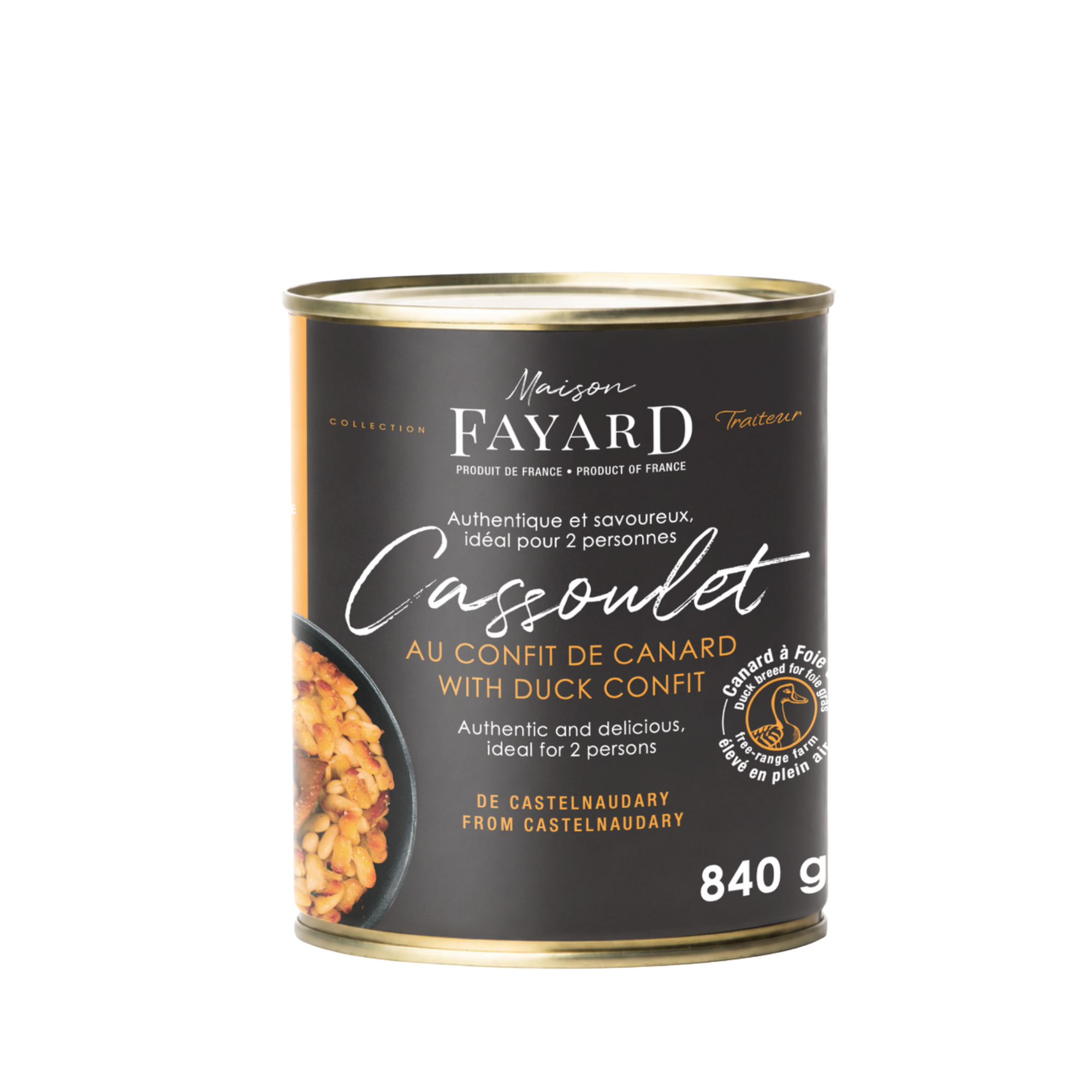
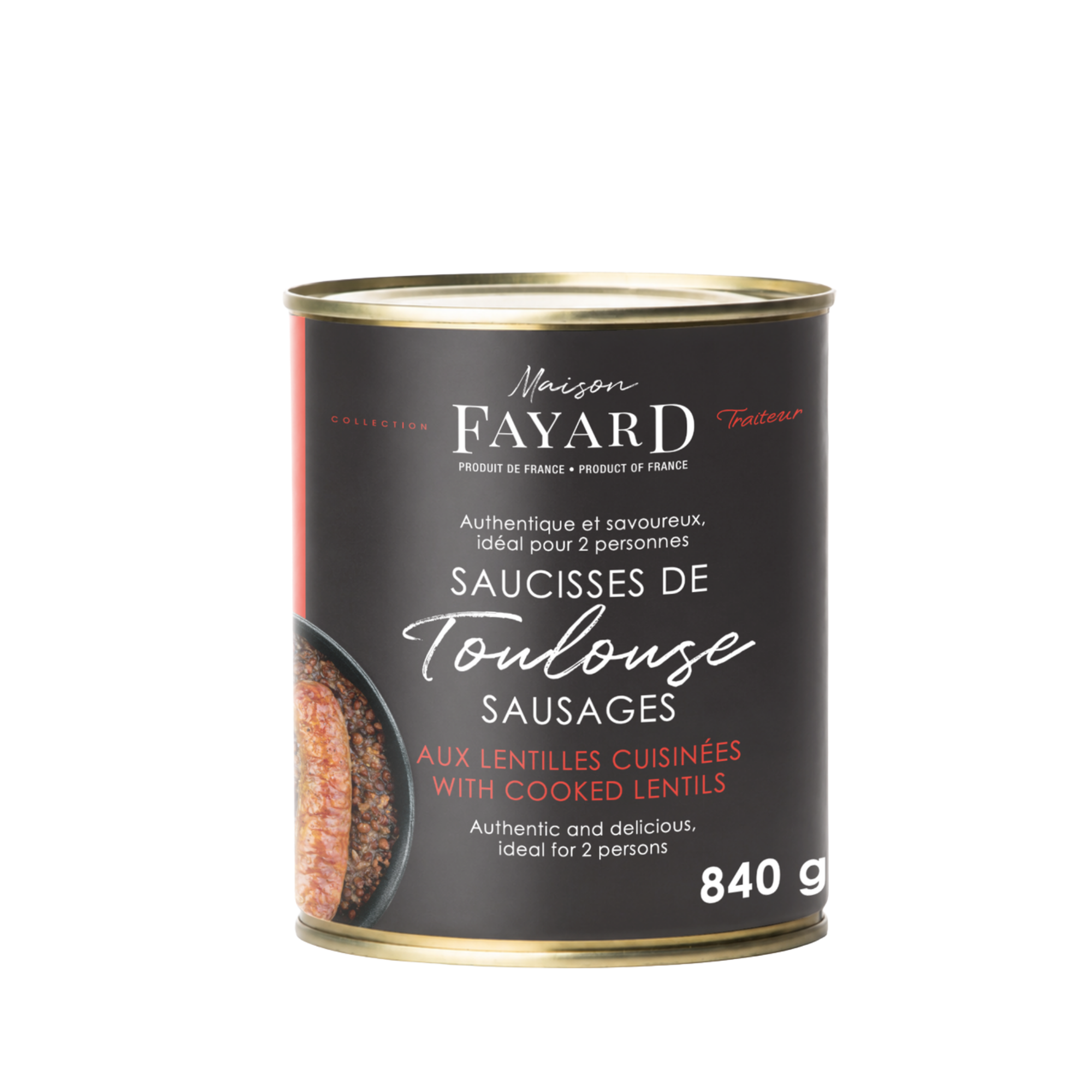
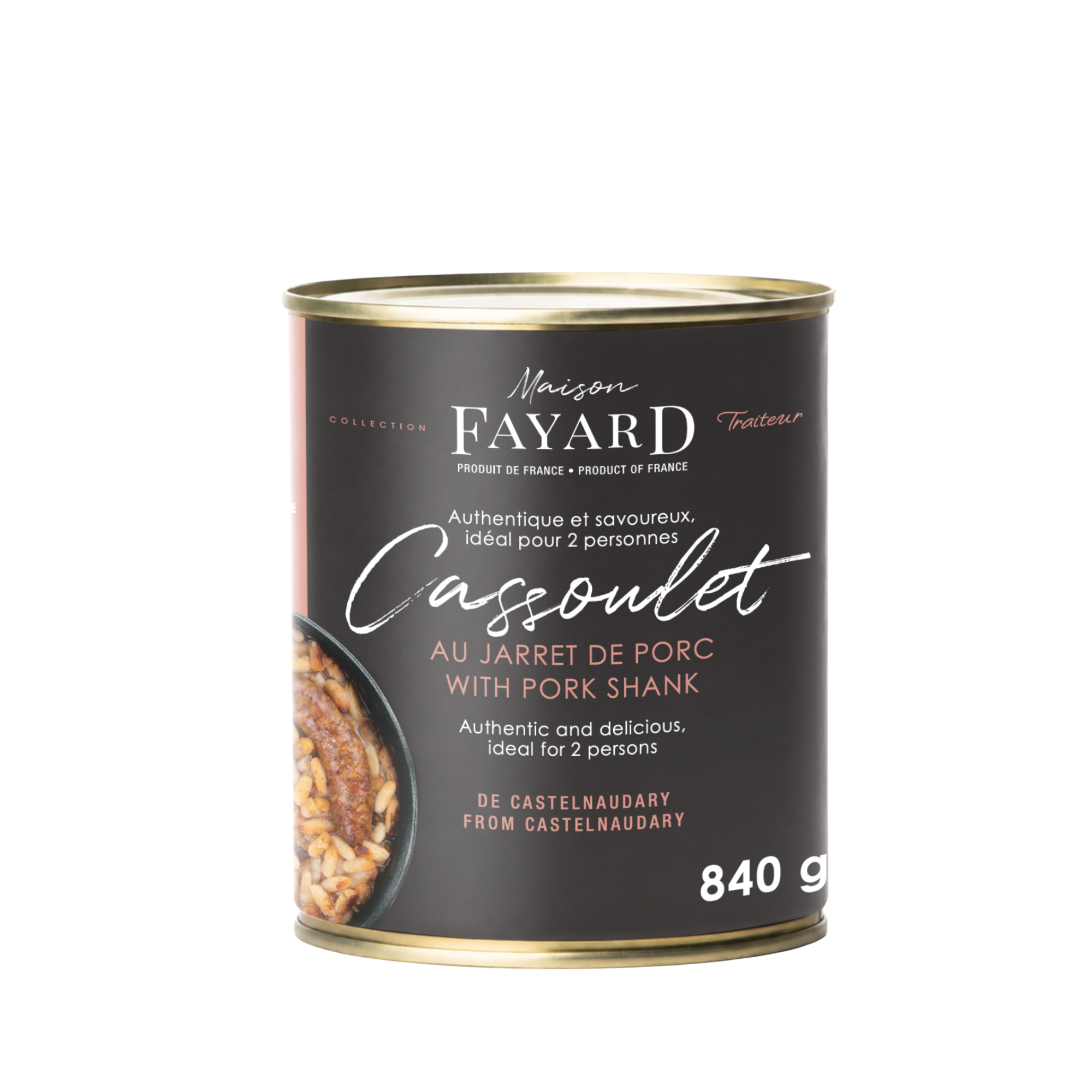

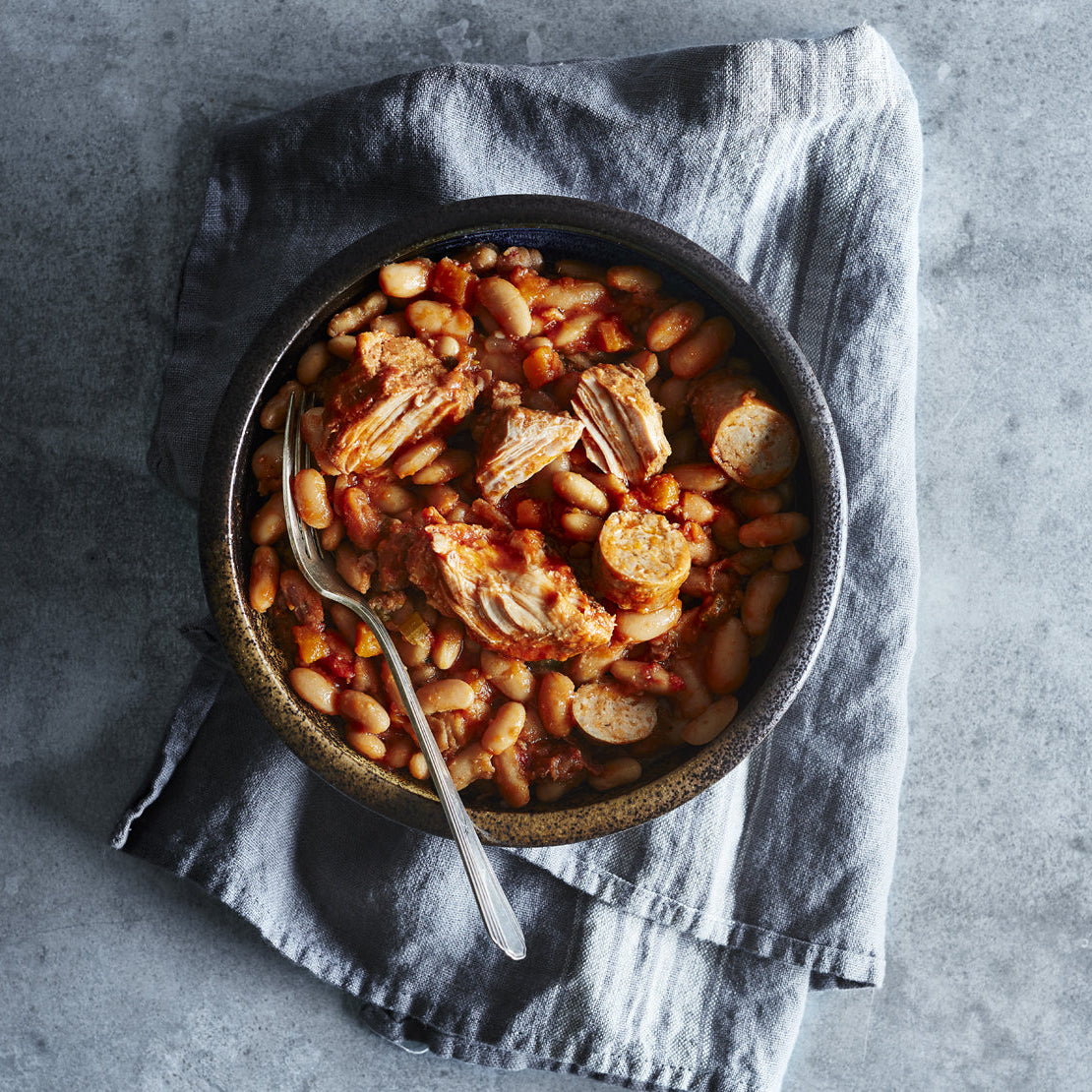
Cassoulet is far more than a bean stew. It is one of the great monuments of French cooking, born in the South-West between Toulouse and Carcassonne, and passionately defended by three towns that each claim to have invented it. The ultimate sharing dish, it brings together melt-in-your-mouth white beans, confit meats and Toulouse sausage, slowly simmered until they form the golden crust it is famous for. Here is everything you need to know to understand it, choose it and enjoy it.
What is cassoulet?
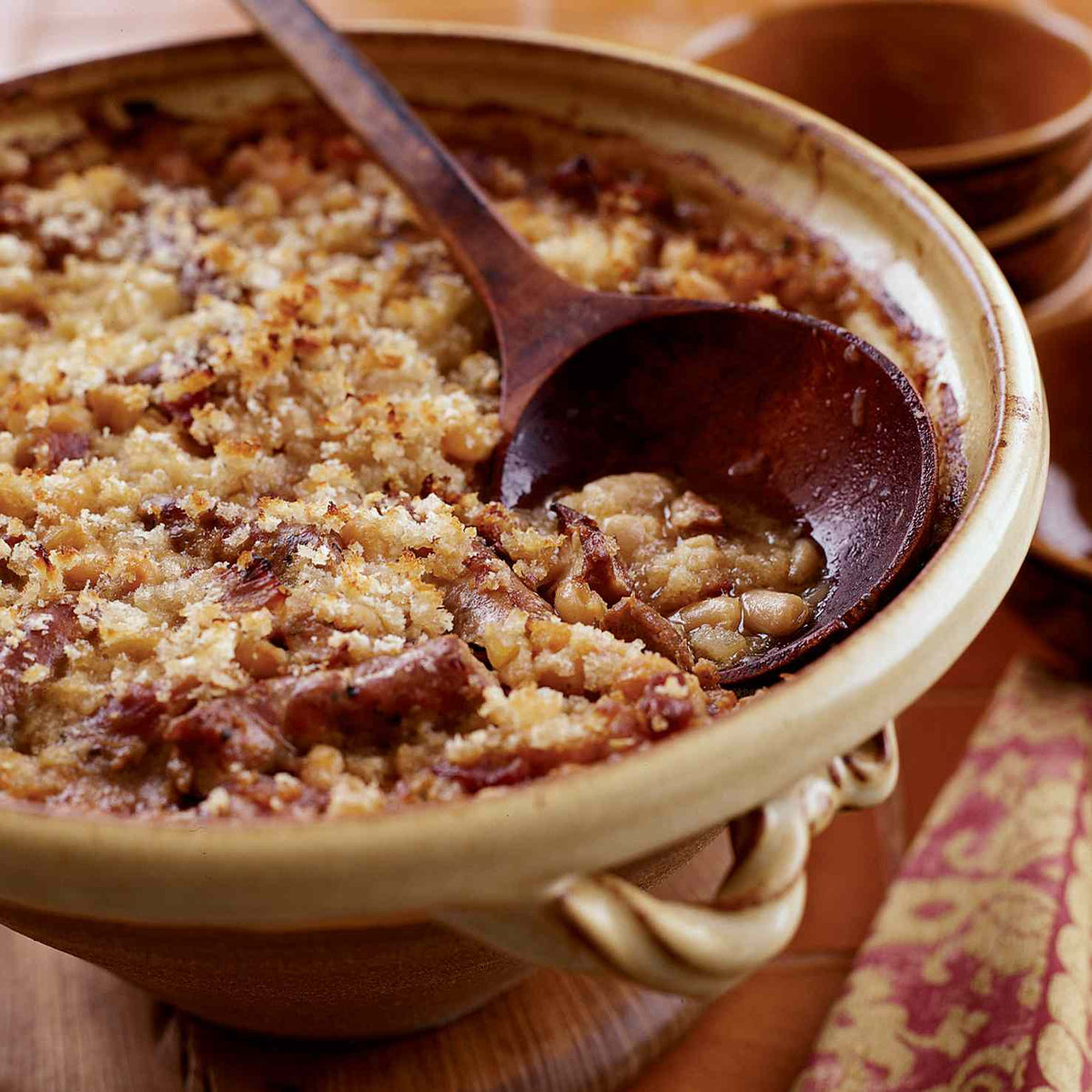
Cassoulet is a stew of dried white beans slowly cooked with meats, mainly duck or goose confit, Toulouse sausage and pork. It takes its name from the cassole, a deep glazed earthenware dish traditionally made in Issel, a village in the Lauragais region. In this wide dish, the cassoulet bakes in the oven for hours, which lets the surface caramelize into a crust that is broken several times during cooking.
It is neither a soup nor a simple bean dish: it is a complete, rich and comforting meal, made for large gatherings and winter evenings. Its success rests on three things: the quality of the beans, the quality of the meats and the patience of the cooking.
The origins of cassoulet
The most famous legend places its birth in Castelnaudary, during the Hundred Years' War. Under siege, the townspeople are said to have gathered every available provision, broad beans, meats and pork fat, and cooked them together in a large cauldron to restore the strength of the town's defenders. The story is probably embellished, but it captures the essence of the dish: cassoulet is about sharing and generosity.
It was originally made with broad beans. The haricot bean, brought from the Americas, only replaced them from the 16th century onwards, and it is what gives cassoulet its unique texture today, both creamy and holding its shape.
Castelnaudary, Toulouse, Carcassonne: the three cassoulets
The great chef Prosper Montagné, a native of Carcassonne, famously summed up the rivalry between the three towns: cassoulet is the God of Occitan cuisine, a God in three persons. God the Father is the cassoulet of Castelnaudary, God the Son that of Carcassonne, and the Holy Spirit that of Toulouse. Each town has its own recipe, and each defends it proudly.
Castelnaudary cassoulet
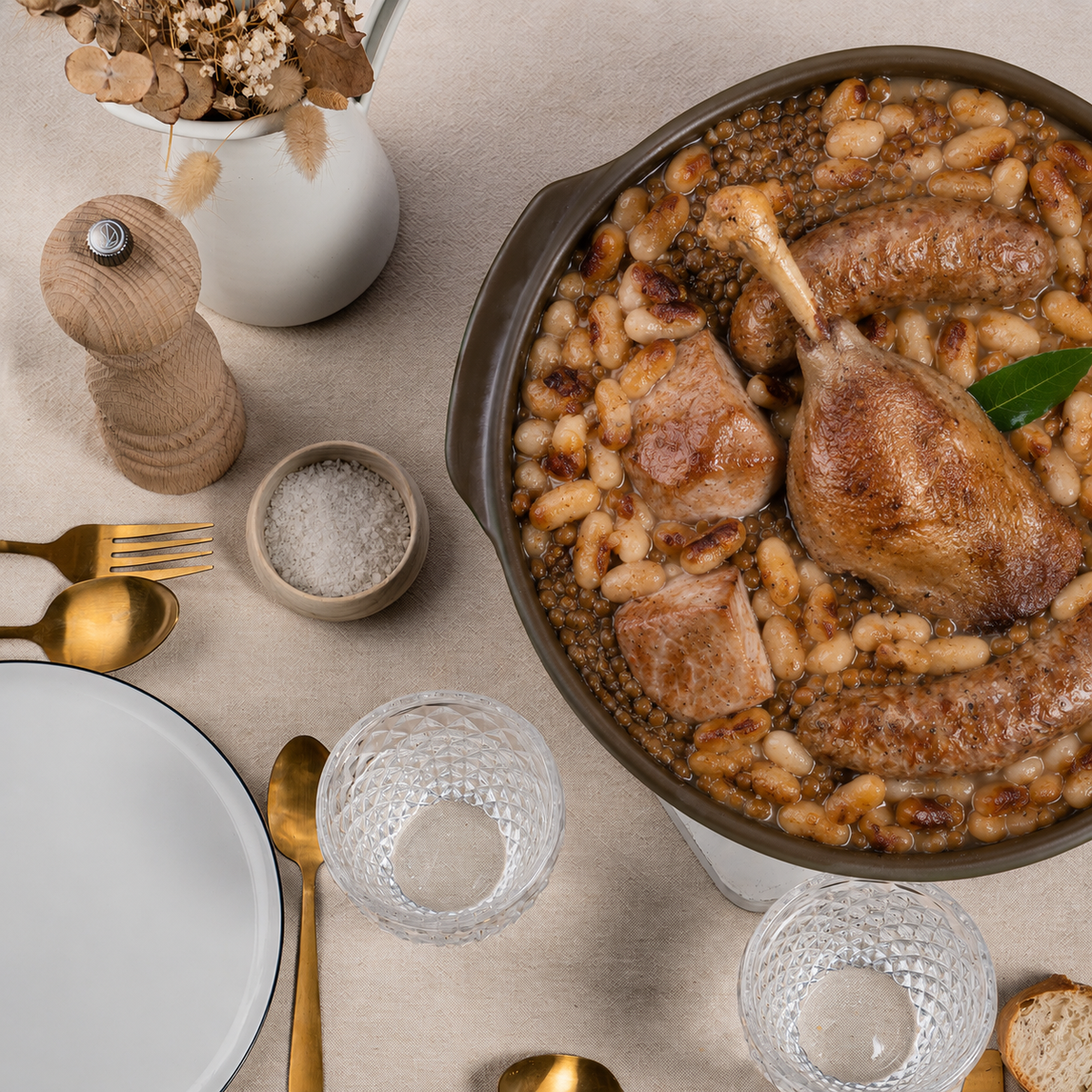
Considered the original cassoulet, it combines beans with duck or goose confit, Toulouse sausage and pork (hock, shoulder or rind). It is the best-known version, the one that made Castelnaudary the world capital of cassoulet. It is also the recipe we chose at Maison Fayard.
Toulouse cassoulet
Cassoulet de Toulouse gives pride of place to the famous Toulouse sausage, often in larger quantities, alongside the confit and sometimes pork belly. Some recipes add mutton. It is known for being slightly more seasoned and is often finished with a thin layer of breadcrumbs.
Carcassonne cassoulet
The Carcassonne version stands out with the addition of leg or shoulder of mutton, and in the past partridge during hunting season. It is the richest in meat and the rarest to find today.
The ingredients of a true cassoulet
The bean is the foundation of everything. Traditionally, cooks use the lingot bean, a large, elongated white bean with a thin skin that absorbs the cooking juices while staying whole. The Lingot de Castelnaudary is the benchmark variety. A bean that is too floury falls apart, one that is too firm does not absorb the flavours: the whole balance of the dish depends on it.
Then come the meats. Duck confit brings tenderness and depth, Toulouse sausage its grilled, lightly peppery note, and pork its generosity. Duck fat binds everything together, and a broth flavoured with garlic, thyme and bay leaf gives the dish its signature aroma.
For the full step-by-step recipe, see our traditional French cassoulet recipe with duck confit.
A dish that takes time
Making cassoulet at home takes real planning: soaking the beans the night before, pre-cooking them, browning the meats, then letting everything simmer in the oven for several hours while breaking the crust at regular intervals. Allow a full day between soaking and serving.
That time is what makes it so rich, but it is also why it is often kept for special occasions. Hence the appeal of a cassoulet made the traditional way and ready to serve.
Maison Fayard Castelnaudary cassoulet
Our cassoulets are made following the Castelnaudary recipe, with French lingot beans, grilled Toulouse sausages and meats simmered in a rich broth with vegetables, spices and duck fat. Simply heat them up to enjoy the taste of the great tables of South-West France.
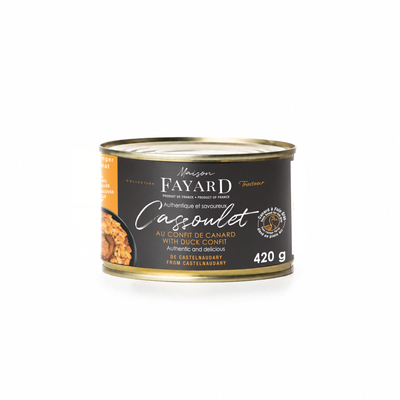
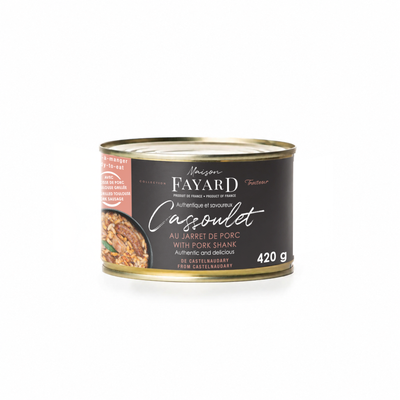
Our canned duck confit cassoulet is the classic: 420 g serves one, 840 g serves two. It also comes in a glass jar, in 380 g, 780 g and 1.4 kg for four. Pork lovers will choose the pork hock cassoulet, and for special occasions, our premium duck leg confit cassoulet comes in a Le Parfait jar.
Find the whole range in our cassoulet and French prepared meals collection, shipped across Canada.
FAQ
What is the difference between Castelnaudary and Toulouse cassoulet?
Castelnaudary cassoulet combines duck confit, Toulouse sausage and pork. Toulouse cassoulet gives a bigger role to Toulouse sausage and sometimes includes mutton. Both are built on slowly simmered white beans.
What meat goes in cassoulet?
A traditional cassoulet contains duck or goose confit, Toulouse sausage and pork, as hock, shoulder or rind. The Carcassonne version also adds mutton.
What beans are used in cassoulet?
The lingot bean is the most common choice because it stays whole while becoming creamy. The Lingot de Castelnaudary is the reference variety. Otherwise, Tarbais beans or large dried white beans such as cannellini will work.
Is cassoulet a complete meal?
Yes. With its beans and meats, cassoulet is a meal in itself. A sharp green salad is all it needs. Find our ideas in what to serve with cassoulet.