

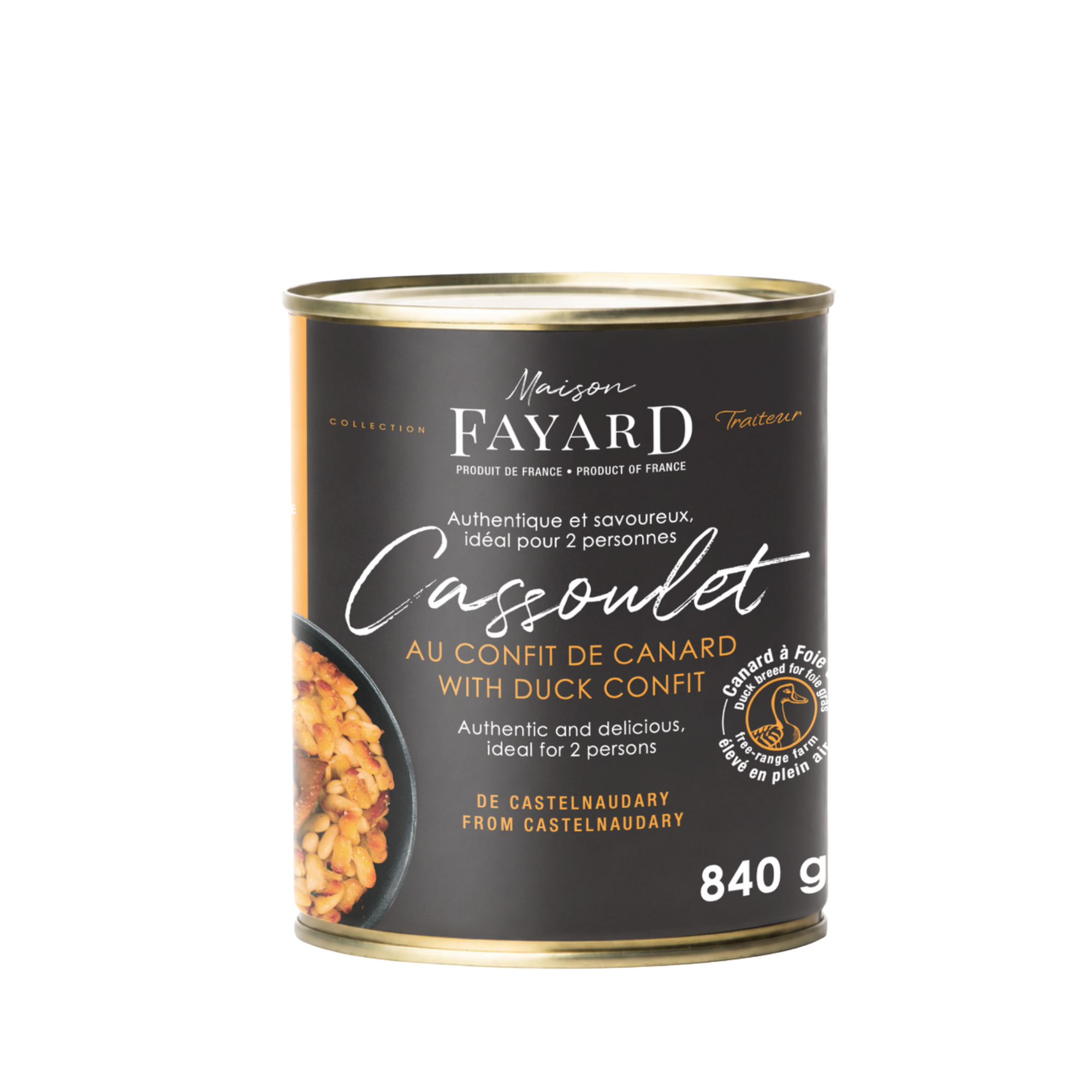
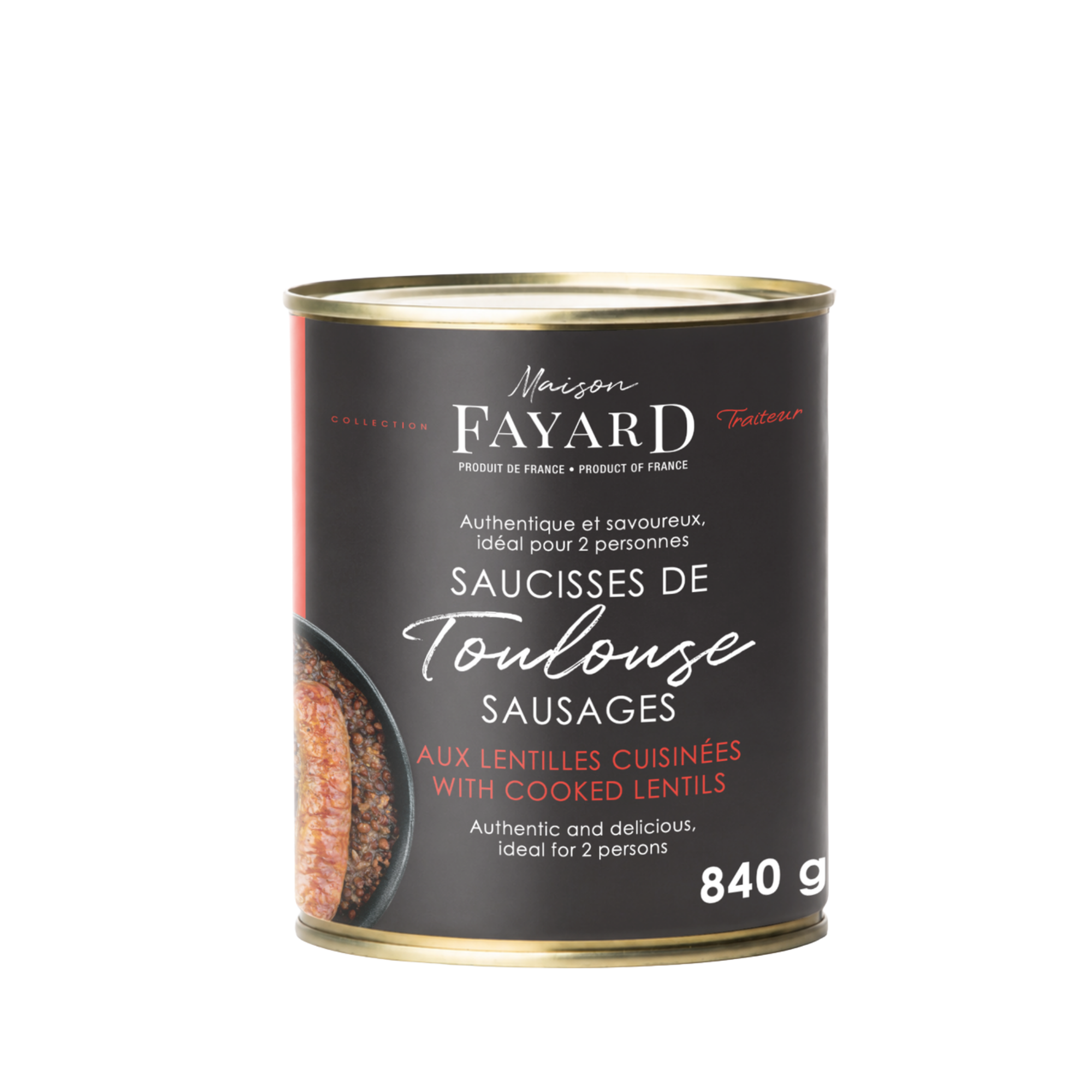
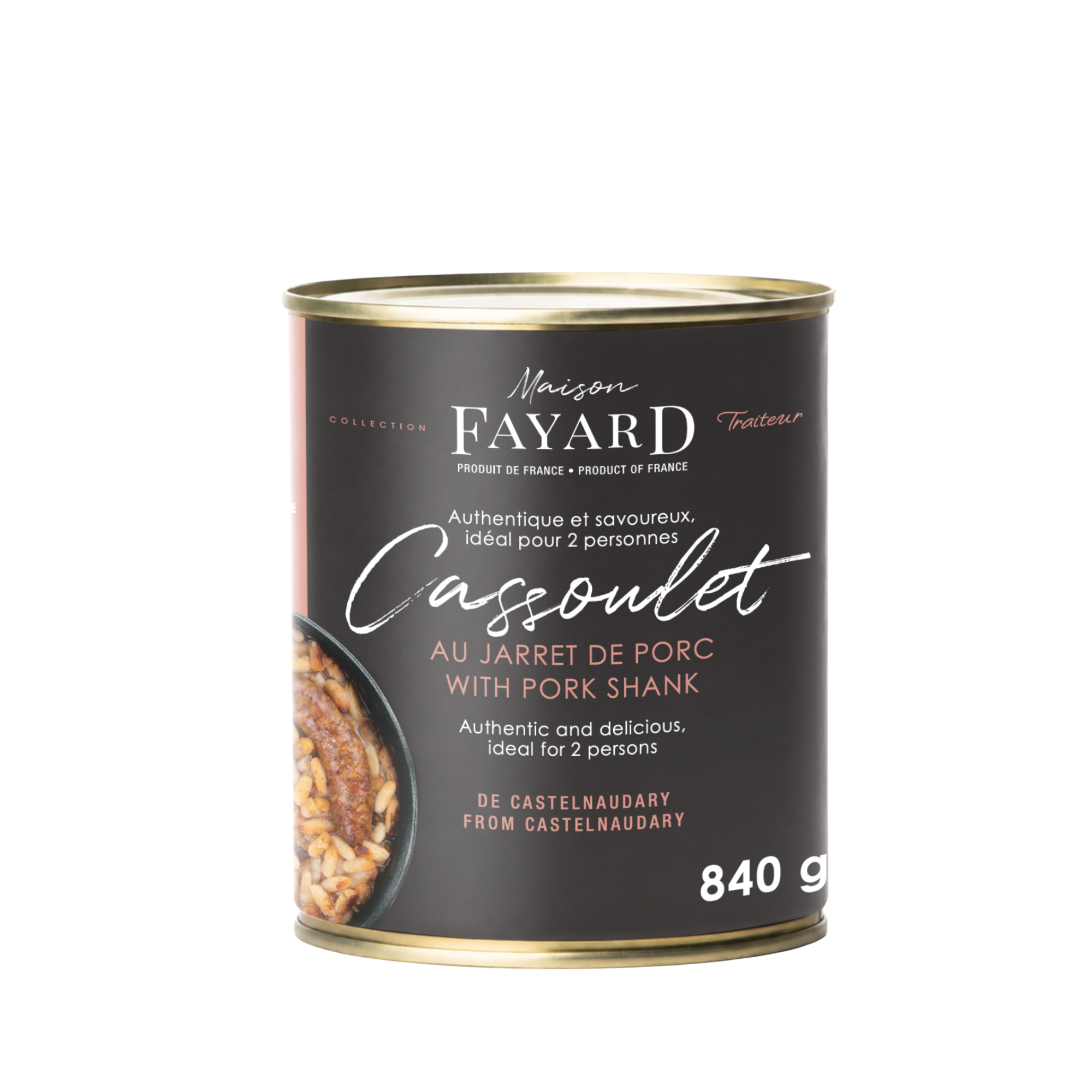

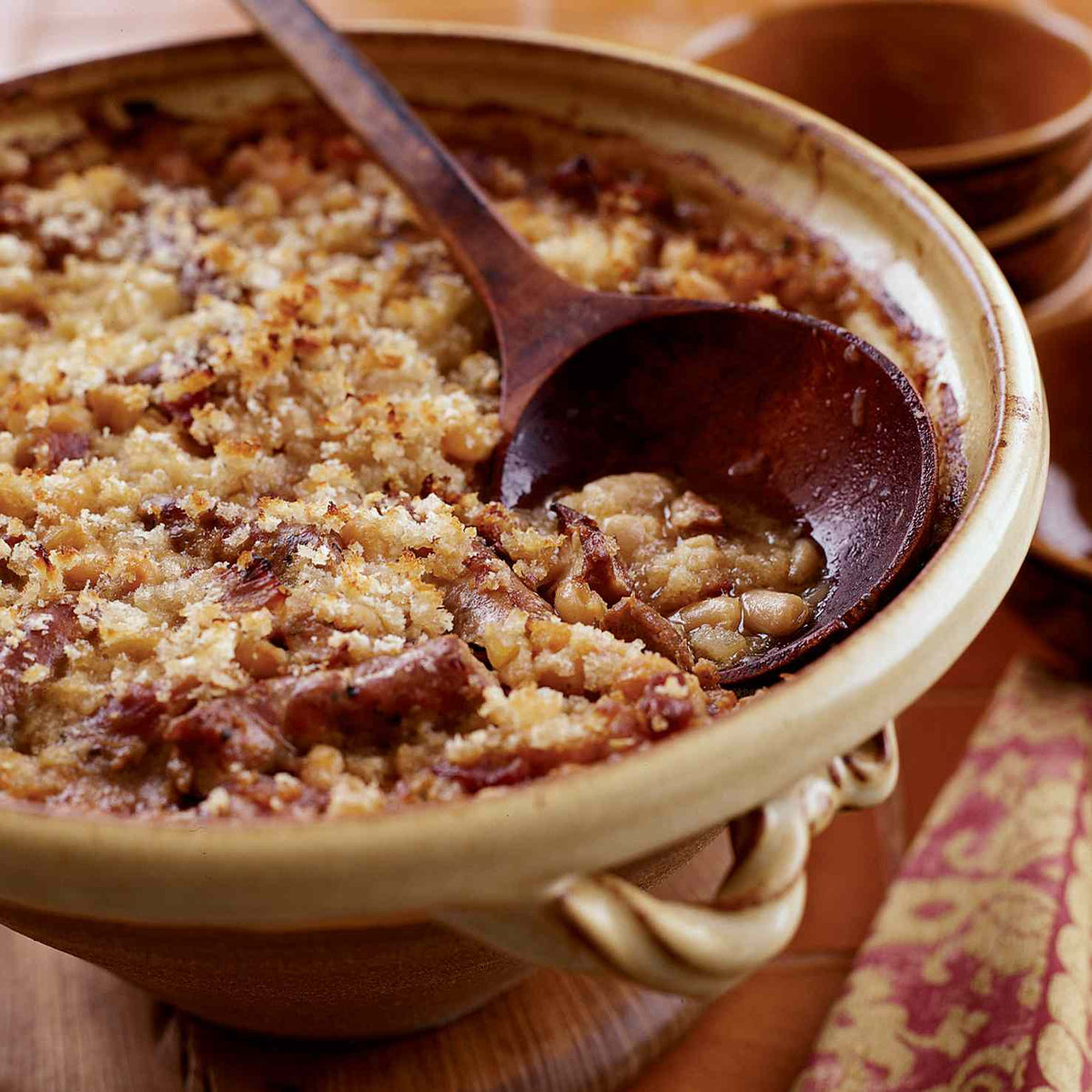
Cassoulet is a generous, rich and complete dish. So the question is not how to add to it, but how to balance it: a light starter, a sharp salad, the right wine and a fresh dessert are all it takes to build a memorable meal. Here are our tips for serving cassoulet the right way, whether homemade or ready to heat.
Does cassoulet need a side dish?
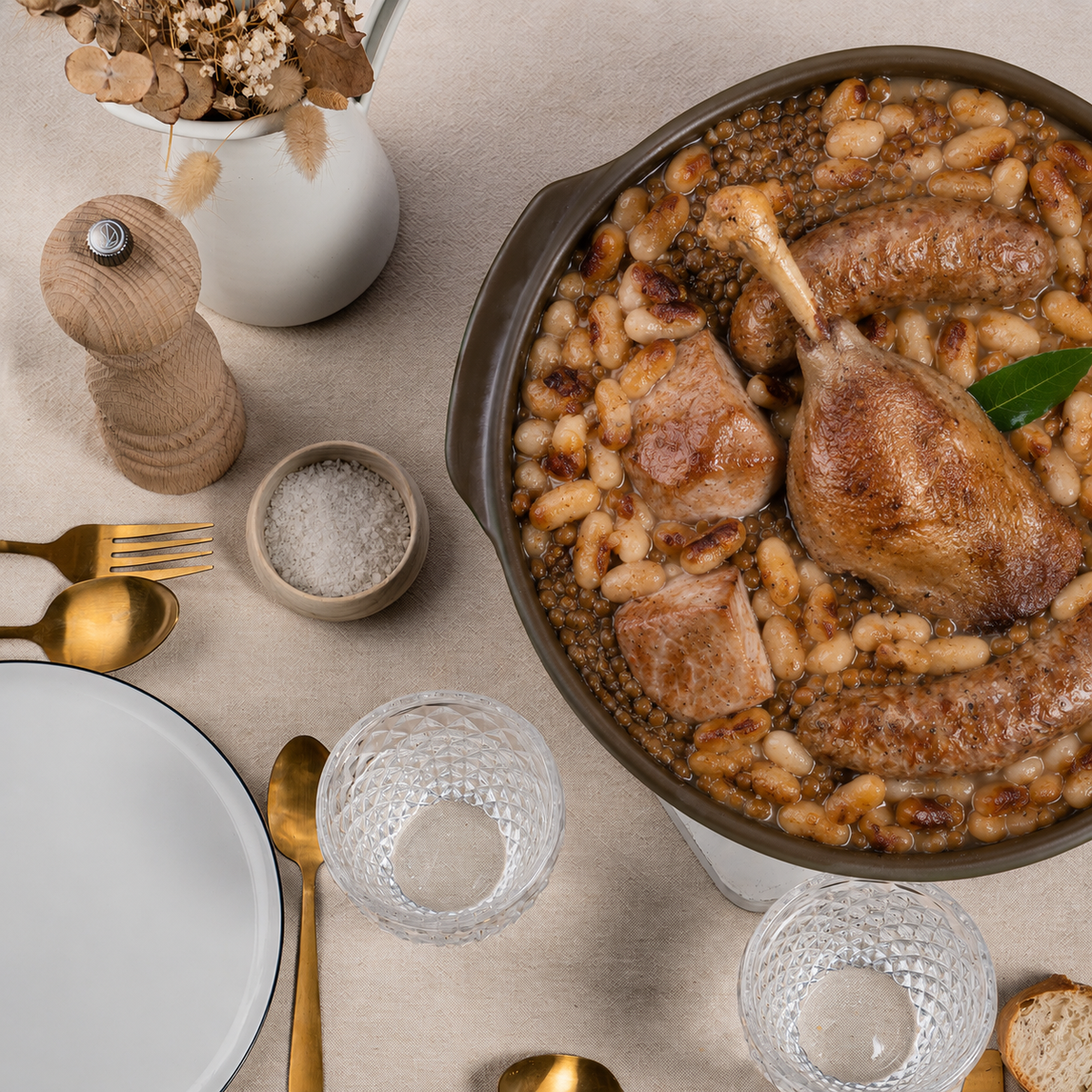
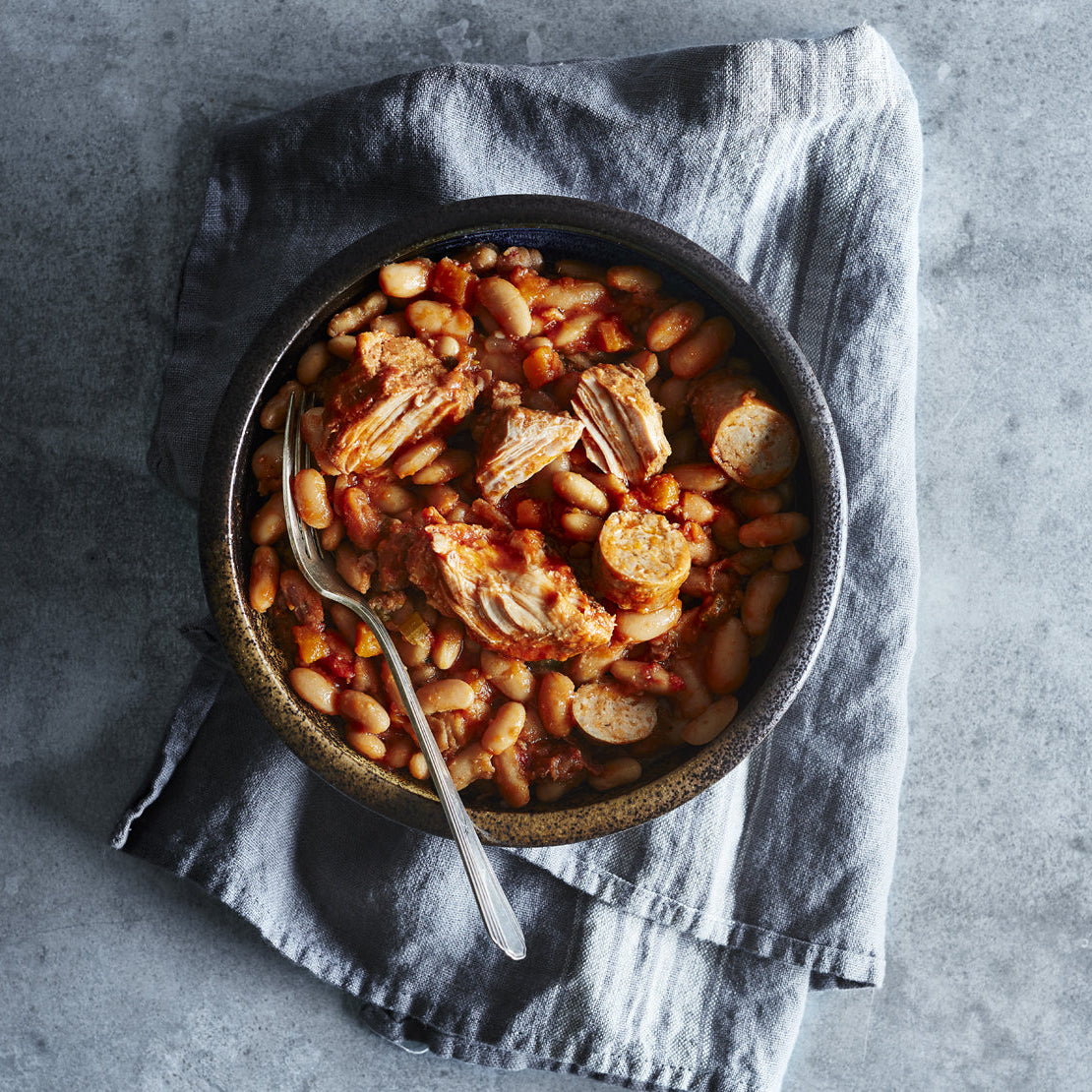
No, and that is one of its great qualities. With its beans, confit and Toulouse sausage, cassoulet already combines starch and meat. In South-West France it is served on its own, straight from the cassole, in the middle of the table. Adding potatoes, rice or pasta would only make the meal heavier.
What cassoulet needs is freshness and acidity to wake up the palate between bites. That is where salad and wine come in.
Salad, cassoulet's best friend
A well-dressed green salad is the ideal side. Choose leaves with character: frisée, escarole, arugula, mesclun or watercress. Their slight bitterness is the perfect answer to the richness of the dish.
Go for a bold vinaigrette with Dijon mustard and red wine or sherry vinegar, perhaps with a finely chopped shallot. An endive and walnut salad, or finely sliced red cabbage, also works very well in winter. Serve it alongside, or right after the cassoulet, the French way.
Bread and small extras
A good crusty country loaf is essential for mopping up the cassoulet juices. A few cornichons or pickled onions on the table bring a welcome touch of acidity, just as you would serve them with choucroute or pot-au-feu.
For a starter, keep it light: a vegetable soup, a few oysters or a simple plate of crudités. Save foie gras and charcuterie for another meal, cassoulet is enough on its own.
What wine goes with cassoulet?
The safest rule is a regional pairing: a red wine from South-West France or the Languedoc, generous, with firm tannins and good freshness. It needs enough structure to stand up to the richness of the confit without overpowering the dish.
The appellations closest to Castelnaudary are natural choices: Malepère, Cabardès, Minervois, Corbières or Fitou. Further west, a Malbec from Cahors, a Tannat from Madiran or a Fronton with dark fruit aromas pair perfectly with Toulouse sausage and duck confit. In Quebec, all of these are easy to find at the SAQ, and in the rest of Canada at your local liquor store.
If you prefer white, choose a full-bodied, low-acid wine, such as an oak-aged white from South-West France. But with cassoulet, red remains king.
What dessert after cassoulet?
After such a rich dish, go for freshness: a citrus sorbet, an orange salad with cinnamon, poached pears or a thin apple tart. Avoid cream or chocolate desserts, which are too heavy at the end of the meal.
How to heat canned or jarred cassoulet
Ready-to-serve cassoulet should be heated gently. On the stove, pour it into a pot and warm it over low heat, stirring carefully so as not to crush the beans. In the oven, it is even better: pour it into a gratin dish, sprinkle with a few breadcrumbs and bake at 180 °C (350 °F) for 25 to 30 minutes. A beautiful golden crust will form, just like homemade cassoulet. Always follow the instructions on the packaging.
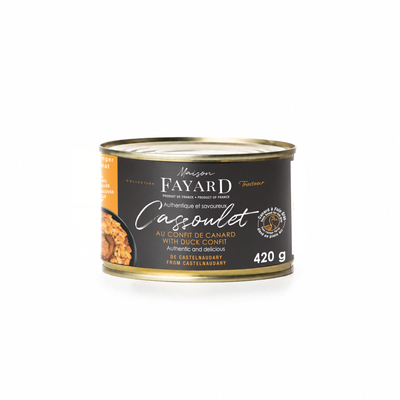
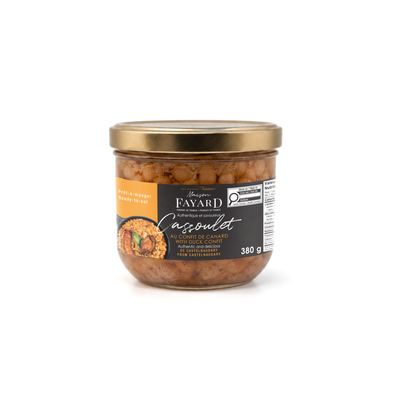
Our canned duck confit cassoulet, made following the Castelnaudary recipe, is perfect for this method. For a large table, choose the 1.4 kg glass jar, or our premium duck leg confit cassoulet.
How much cassoulet per person?
As a main course, allow 400 to 500 g of cassoulet per person. Our formats are designed accordingly: 420 g for one and 840 g for two in cans, or 380 g, 780 g and 1.4 kg for one, two and four guests in glass jars. For a festive meal, plan a little extra: cassoulet is even better the next day.
Want to make it yourself? Follow our traditional French cassoulet recipe with duck confit.
FAQ
What salad goes with cassoulet?
A green salad with bold flavour, such as frisée, escarole or arugula, dressed with a mustard vinaigrette. Its bitterness and acidity balance the richness of cassoulet.
Red or white wine with cassoulet?
Red wine is the classic pairing, ideally from South-West France or the Languedoc: Minervois, Corbières, Malepère, Cahors or Madiran. A full-bodied, oaked white can work, but red is the best match.
Can you serve cassoulet with potatoes?
It is not recommended. Cassoulet already contains beans, which play the role of the starch. Adding potatoes would make the meal too heavy.
How do you reheat cassoulet in the oven?
Pour the cassoulet into an ovenproof dish, add a little broth if it looks dry, sprinkle with breadcrumbs and bake at 180 °C (350 °F) for 25 to 30 minutes, until piping hot and golden on top.