



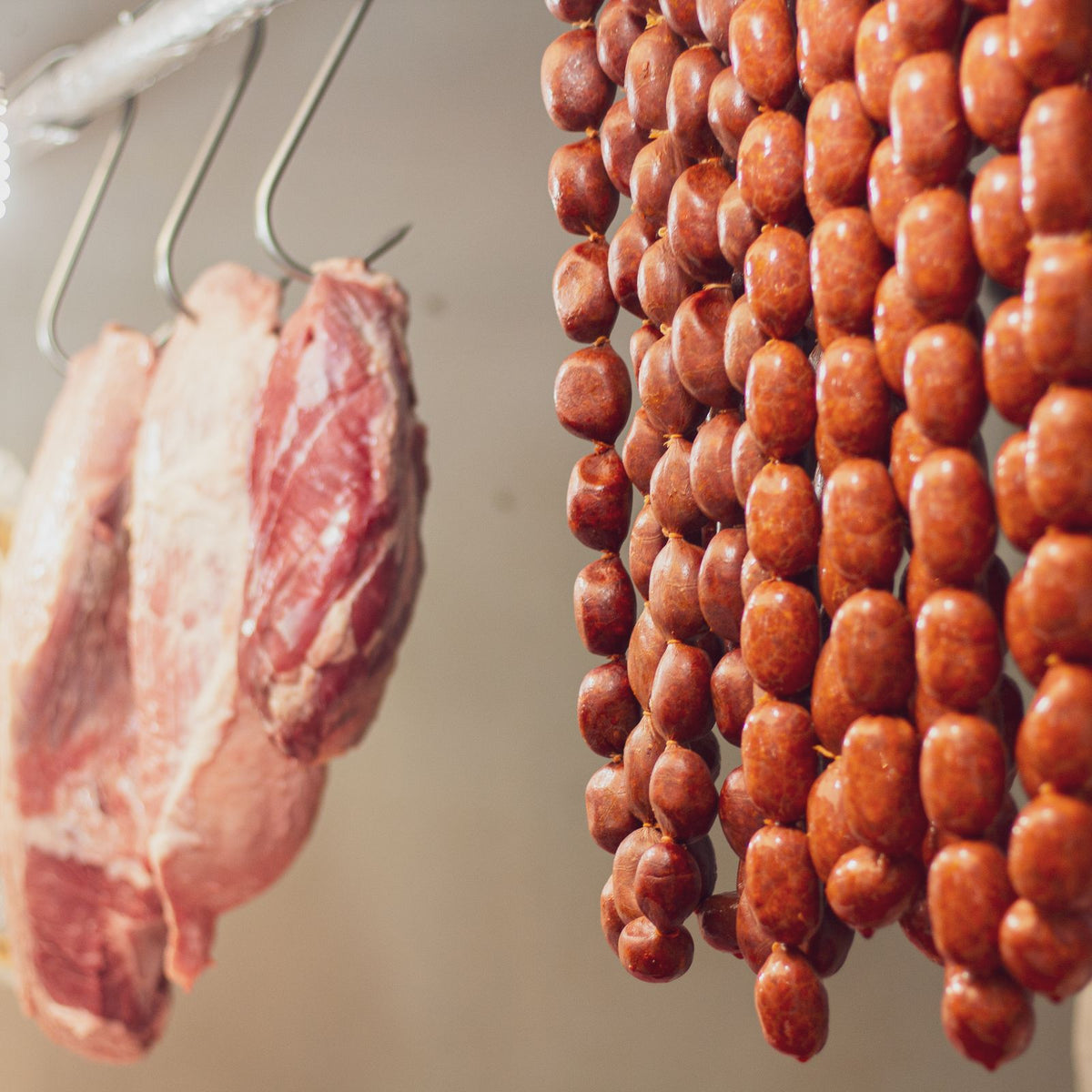
With its bright red colour and paprika aroma, chorizo is one of the most recognizable charcuteries in the world. A star of the apero and a precious ingredient in cooking, it comes in many versions: mild or spicy, cured or fresh, Spanish or French-style. Here is how to find your way, choose it and enjoy it.
What is chorizo?
Chorizo is a pork sausage from the Iberian Peninsula, seasoned with garlic, salt and above all pimentón, Spanish paprika, which gives it its red colour and signature taste. The paprika can be sweet, hot or smoked, which explains the wide variety of chorizos.
Mild or spicy chorizo?
Mild chorizo is made with sweet paprika: it is fragrant, slightly smoky and not hot. Spicy chorizo contains hot paprika or chili for a stronger heat. For the apero and to please the most people, mild is often the best choice.
Cured or fresh chorizo?
Cured chorizo is dried for several weeks, like saucisson: it is eaten raw, in thin slices. Fresh chorizo must be cooked: it is grilled, pan-fried or added to stews. Mexican chorizo, very common in North America, is usually a fresh, crumbled preparation, very different from cured Spanish chorizo.
Spanish and French-style chorizo
Chorizo was born in Spain, where every region has its own recipes. In France, many artisan charcutiers make chorizo-style dry-cured saucissons inspired by this tradition: the same base of pork and paprika, with the drying technique of French saucisson. They offer a bold but balanced taste, perfect for the apero.
How to serve chorizo at the apero
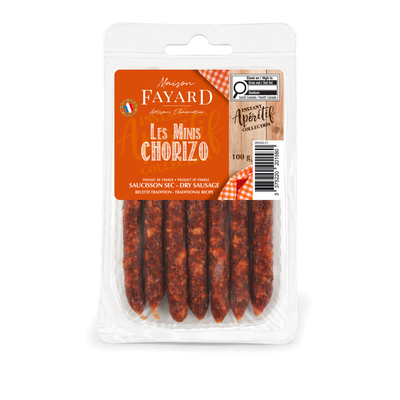
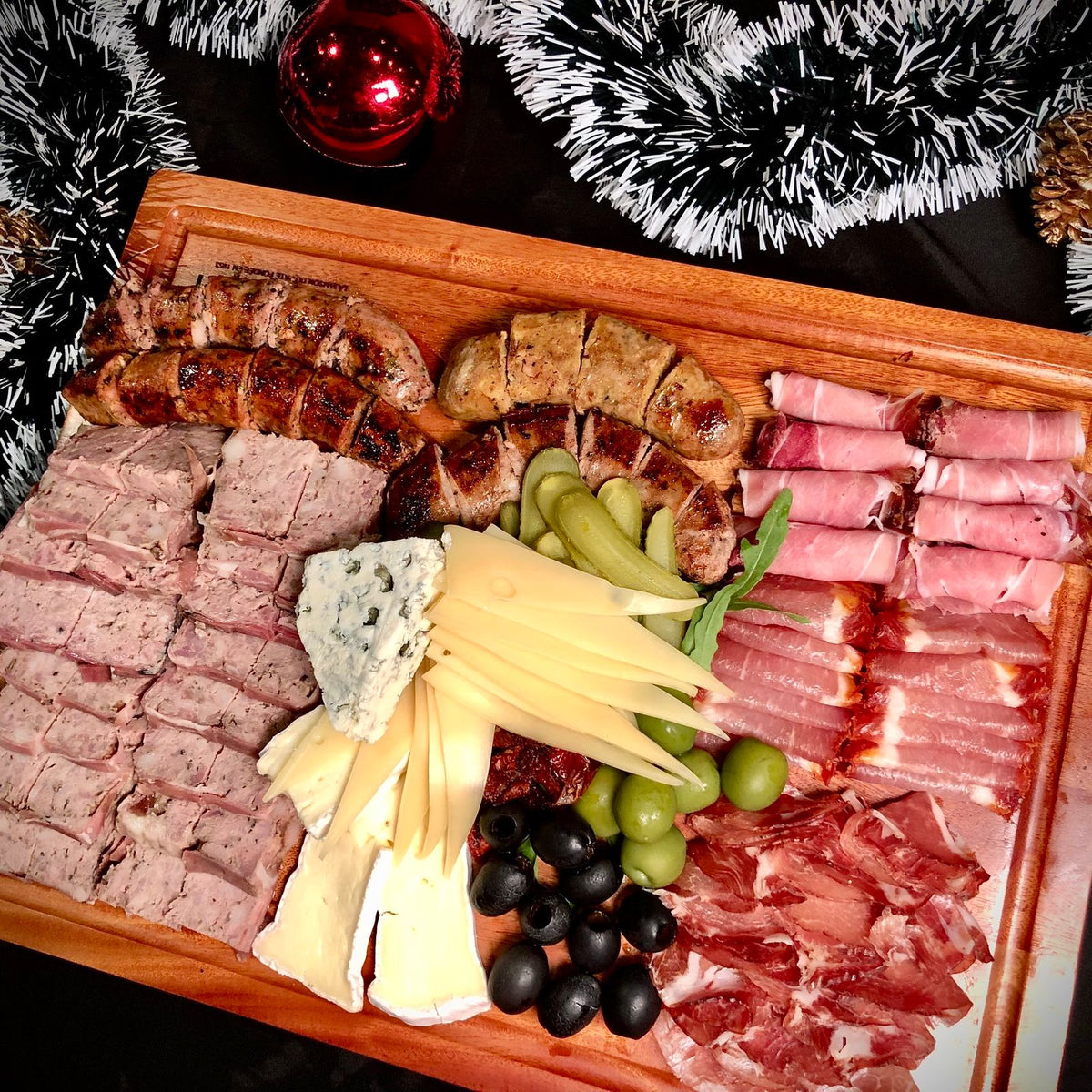
Slice it thinly, on the bias, to release its aromas. Arrange it on a board with olives, toasted almonds, a sheep's milk cheese and toasted bread rubbed with tomato. Chorizo-style mini saucissons, already bite-sized, are ideal for snacking without a knife. To build the perfect board, follow our guide how to make a charcuterie board.
How to cook with chorizo
Chorizo flavours every dish it touches. A few pan-fried slices lift scrambled eggs, pasta, vegetable soup or homemade pizza. It is essential in paella and pairs very well with chicken, roast potatoes and legumes. Seared in a pan, it releases a fragrant red oil that makes a great aromatic base.
What wine goes with chorizo?
A fruity, supple red such as a Spanish Tempranillo, a Côtes-du-Rhône or a Beaujolais pairs perfectly with chorizo. A well-chilled rosé also works very well at the apero, as does a lager.
How to store chorizo
A whole cured chorizo keeps like saucisson: in a cool, dry, airy place, wrapped in a cloth. Once cut, cover the cut end with plastic wrap and keep it in the refrigerator. Find all our tips in our guide dry-cured saucisson: how to choose, slice and store it.
Our chorizo-style saucissons
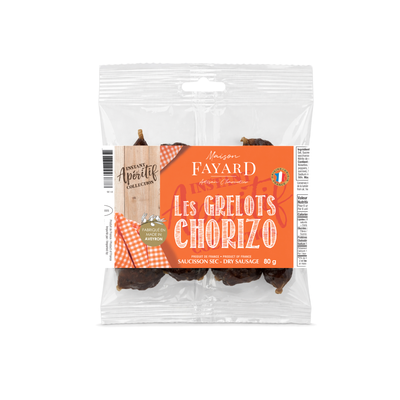
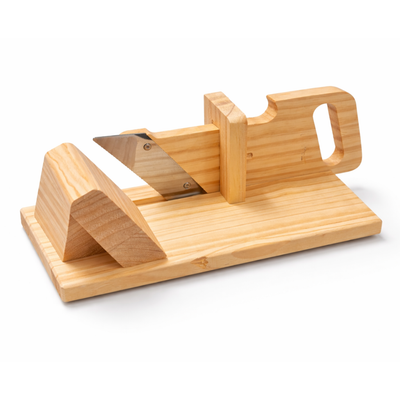
Our chorizo-style saucissons are selected from artisanal producers and made in France with paprika and a blend of spices. For the apero, discover our Minis Chorizo, ready to snack on, and our Grelots Chorizo. To slice larger formats, discover our wooden saucisson guillotine.
The full selection is in our saucisson and charcuterie collection, shipped across Canada.
FAQ
Can chorizo be eaten raw?
Cured chorizo is eaten raw, in thin slices. Fresh chorizo must be cooked before eating.
What is the difference between chorizo and saucisson?
Chorizo is seasoned with paprika, which gives it its red colour and smoky or spicy taste. French saucisson is usually seasoned simply with salt and pepper.
Should you remove the skin of chorizo?
Yes, the skin of cured chorizo is usually removed before slicing, as with saucisson.
Is chorizo spicy?
It depends on the paprika used. Mild chorizo is not spicy, spicy chorizo is hotter.