


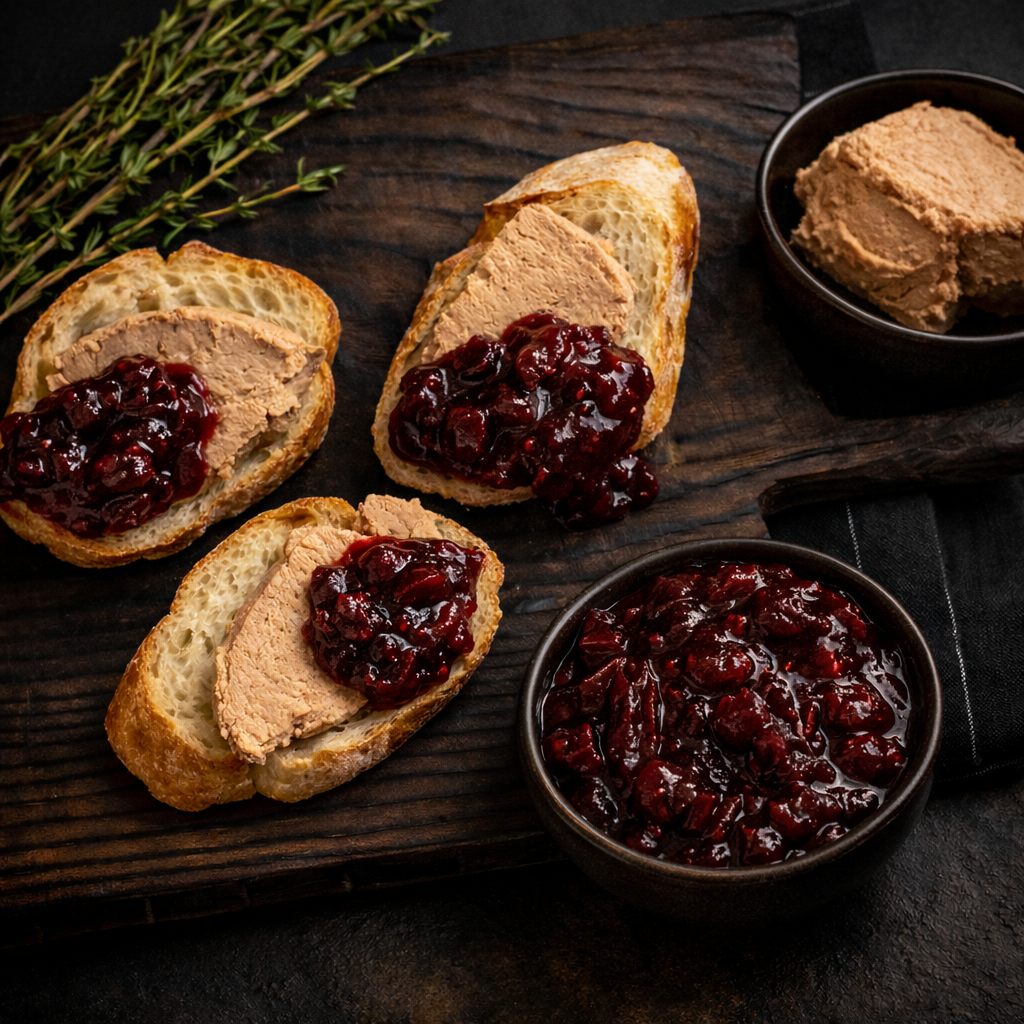
Foie gras is one of the strongest symbols of French gastronomy. Served in slices on toasted bread, pan-seared or cooked au torchon, it holds a special place on festive tables. But what exactly does the word mean, how is foie gras made, and how do you choose between duck and goose, whole and block? Here is everything you need to know to understand it and choose it.
What is foie gras?
Foie gras is the liver of a duck or goose that has been specially fattened. It differs from an ordinary liver in its size, its ivory to pinkish colour and above all its texture: rich in fat, it melts in the mouth and offers an incomparable lingering finish.
In France, foie gras is part of the cultural and gastronomic heritage protected by law. Its name is strictly regulated: only the liver of fattened ducks or geese can be called foie gras, and each designation, whole, block or mousse, follows precise composition rules.
Where does foie gras come from?
Fattening geese is a very old practice, already known in ancient Egypt, where people observed that wild geese built up reserves before their long migrations. The tradition then spread across Europe before taking root in France.
Today, two great regions embody French foie gras. South-West France, with Périgord, Gers and Landes, is the home of duck foie gras. Alsace has a long tradition of goose and duck foie gras and notably claims the invention of foie gras pâté en croûte in the 18th century.
How is foie gras made?
Foie gras is obtained by fattening ducks or geese during the last weeks of their rearing. The birds are generally first raised outdoors for several weeks, then fed corn during a short final phase, called gavage, which allows the liver to develop.
In France, this production is governed by national and European regulations on animal welfare and hygiene. Some designations, such as the Protected Geographical Indication Canard à foie gras du Sud-Ouest, also impose strict conditions on rearing, feeding and origin.
Foie gras and the ethical question
Foie gras regularly sparks debate, centred on the practice of gavage. Its supporters point to ancestral know-how, often family-sized farms and strong regulation. Its critics question the force-feeding of the birds, and some countries have banned its production.
For a thoughtful consumer, the best answer is transparency: choose foie gras with a clearly stated origin, from identified supply chains and traditional regions such as Périgord or South-West France. In Canada, the sale and consumption of foie gras are legal, and Quebec is itself a producer.
Duck foie gras or goose foie gras?
Duck foie gras accounts for the vast majority of production. It has a more pronounced, slightly rustic taste and a melting texture. Goose foie gras, rarer and more expensive, stands out for its finer, more delicate flavour and silkier texture.
To learn more, read our comparison duck or goose foie gras: what are the differences.
The different forms of foie gras
Whole foie gras
Made of one or more whole lobes, simply seasoned and then cooked, it is the noblest form and the closest to the raw product. Its texture is slightly irregular and its taste the most authentic.
Block of foie gras
A block is made from emulsified and then reshaped foie gras. Its texture is smooth and even, its price more accessible, and it slices easily. Find out the differences in detail in block of foie gras or whole foie gras.
Foie gras au torchon
An ancestral cooking method: the liver is rolled in a cloth and poached in broth. The result is a dense texture and a very pure taste, prized by connoisseurs.
Mi-cuit, cooked and raw foie gras
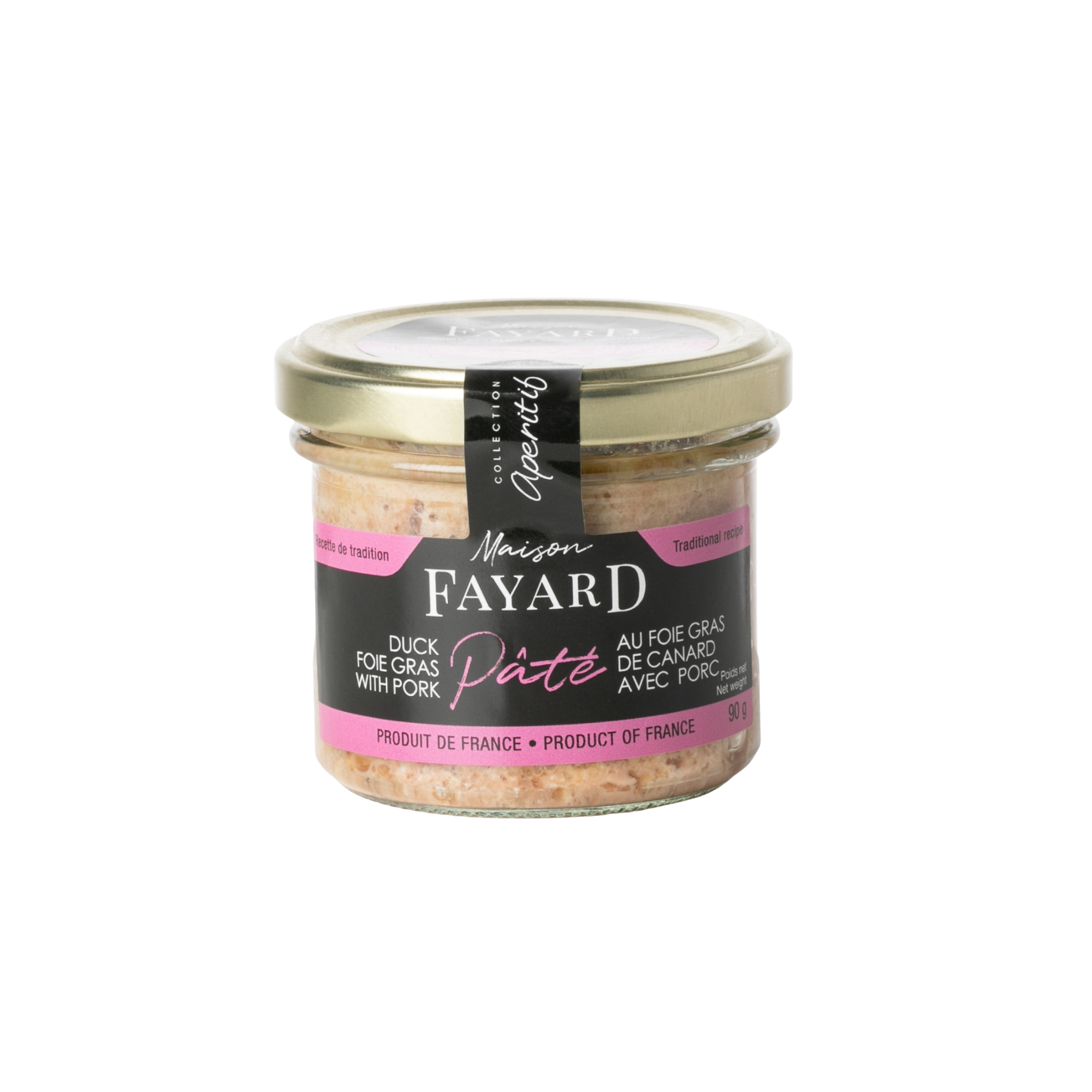
Raw foie gras is cooked at home, as a terrine or pan-seared in slices. Mi-cuit is pasteurized at low temperature and kept in the refrigerator. Cooked foie gras, sterilized in a can or jar, keeps for several years at room temperature and even improves with time.
How to enjoy foie gras
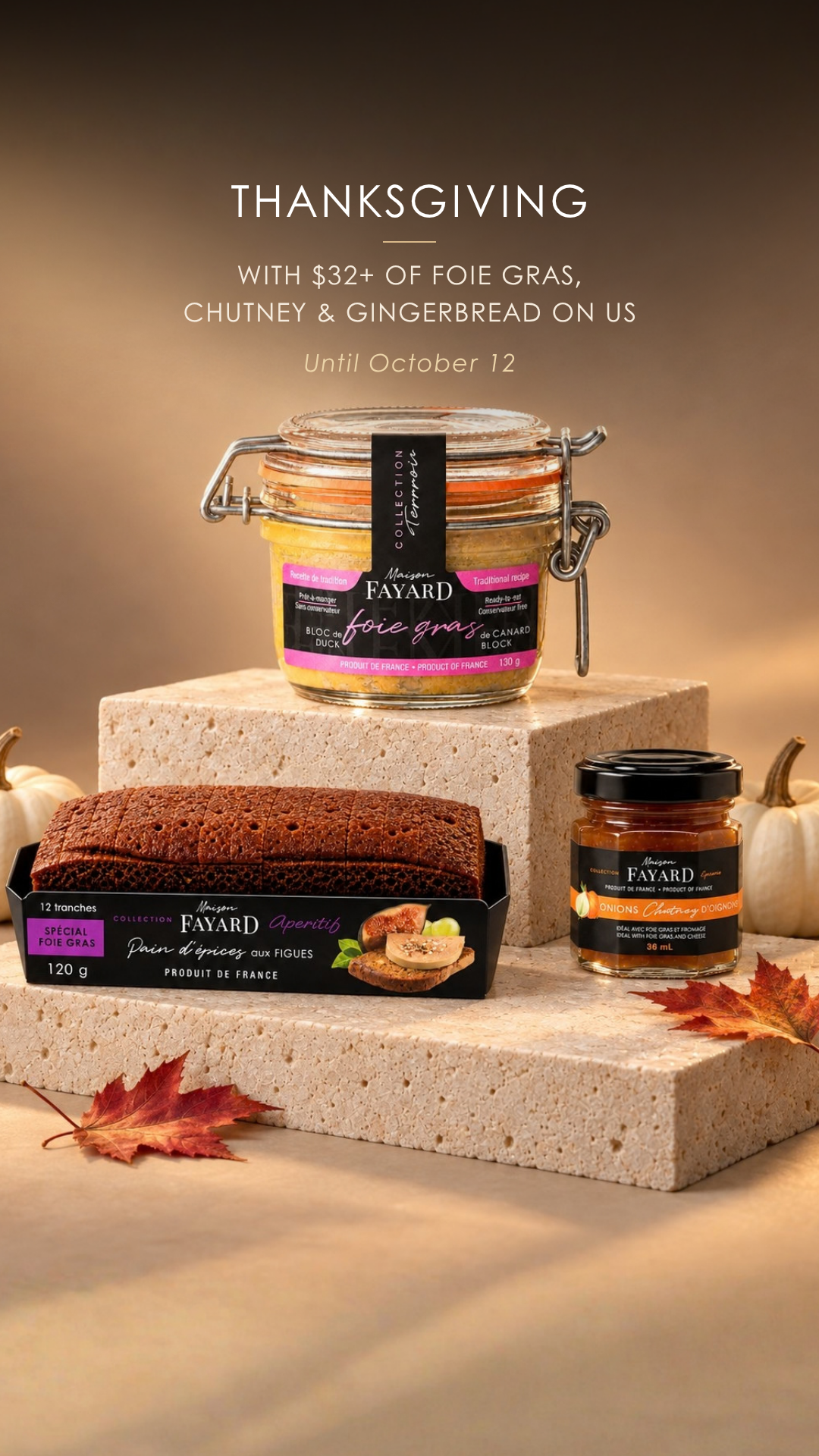
Serve foie gras cool, around 12 °C, taken out of the refrigerator about ten minutes before serving. Slice it with a thin-bladed knife dipped in hot water and serve it with toasted country bread, gingerbread or brioche, a fig or onion chutney and a pinch of fleur de sel.
Find all our ideas in what to serve with foie gras and our pairings in which wine with foie gras.
Maison Fayard foie gras
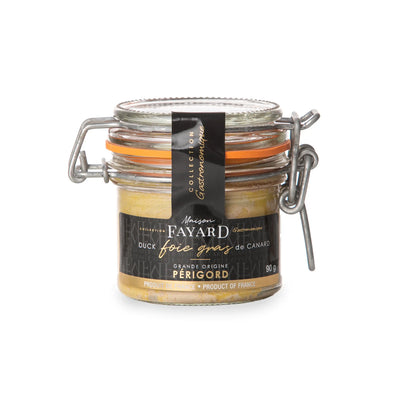
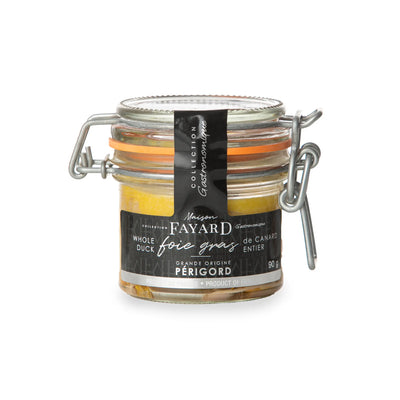
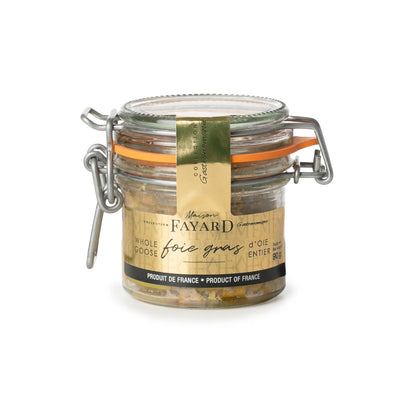
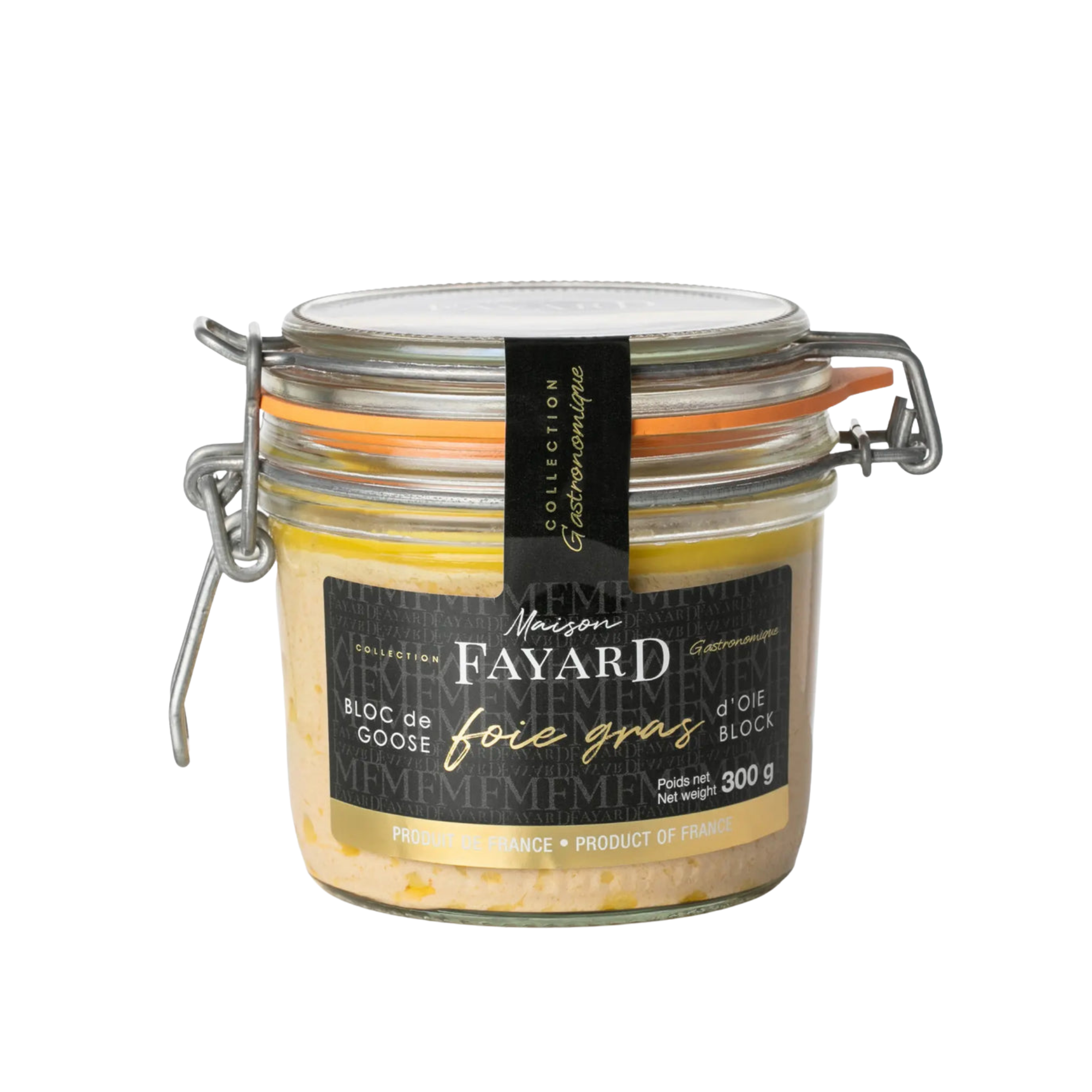
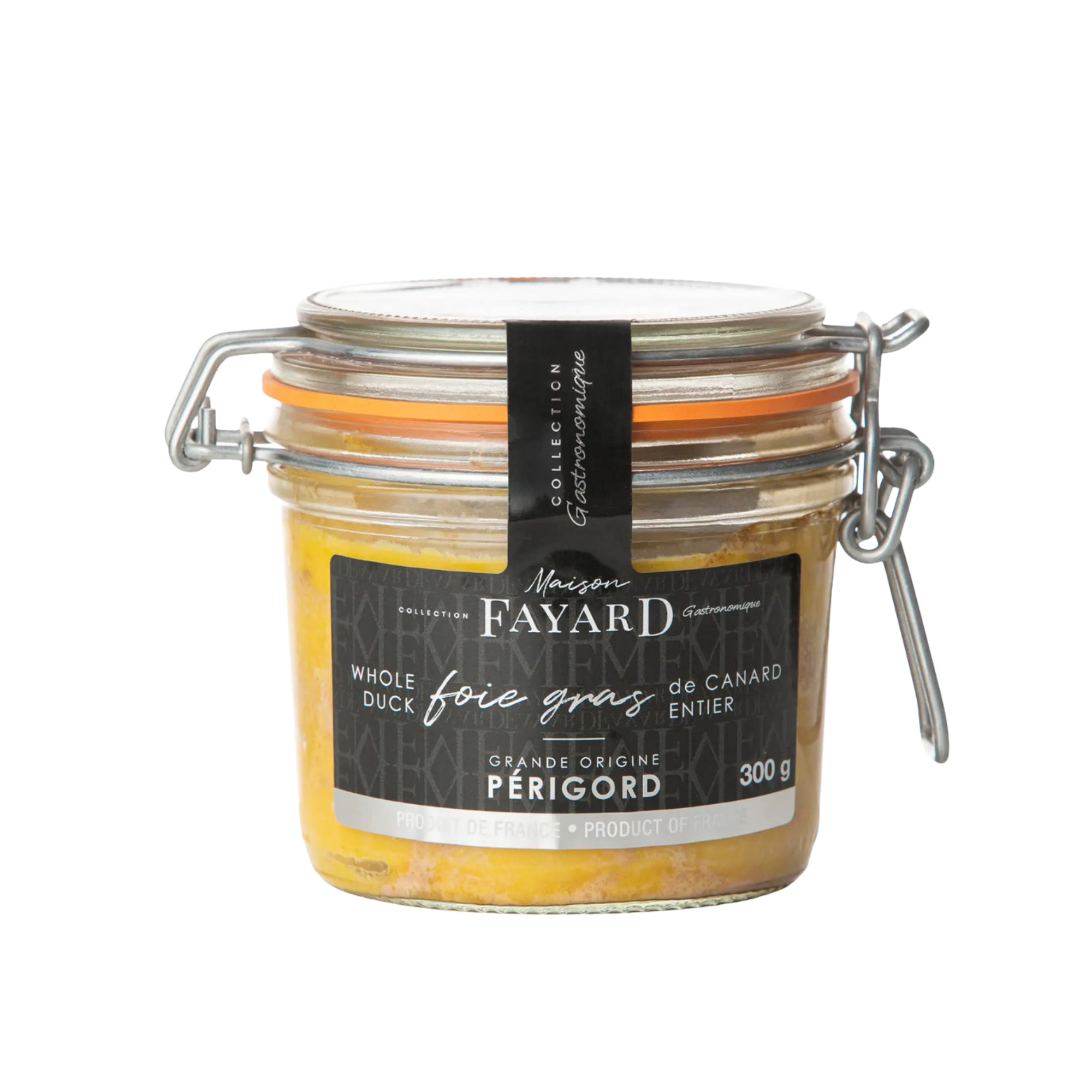
We select our foie gras from France's great traditional regions. Our Périgord duck foie gras block in a glass jar is the ideal place to start, our whole Périgord duck foie gras the piece for special occasions, and our whole goose foie gras is for lovers of finesse. Purists will choose the whole duck foie gras cooked au torchon.
The whole selection is available in our foie gras collection, shipped across Canada.
FAQ
What does foie gras mean?
Foie gras literally means fat liver in French. The term refers to the liver of a duck or goose fattened using a traditional method.
Is foie gras legal in Canada?
Yes. The sale and consumption of foie gras are legal in Canada, and Quebec has several producers. Foie gras imported from France is also available.
How much foie gras per person?
Allow 40 to 50 g per person as a starter and 20 to 30 g as bites for an apero.
How do you store foie gras?
In a can or jar, cooked foie gras keeps for several years in a cool, dry place. Once opened, keep it in the refrigerator, covered with plastic wrap touching the surface, and eat it within 2 to 3 days.